
The spine gurus at Benvenue Medical, Inc. have made the U.S. commercial launch of the Luna 3D Interbody Fusion System happen. In conjunction with this rollout, which took place at the recent North American Spine Society (NASS) Annual Meeting, the company accepted the 2015 Spine Technology Award for Luna in the Minimally Invasive Spine and Thoracolumbar Care categories.
Benvenue Medical Launches Luna 3D in the U.S.
2 min read Premium comments
Secondary
“Luna 3D is a significant improvement over other available static and expandable TLIF cages, ” said Michael Wang, M.D., chief of neurosurgery at University of Miami Health System, in the October 14, 2015 news release. “Due to the implant’s cannula delivery, implantation is possible through a narrow surgical corridor, resulting in minimal nerve root retraction and tissue dissection.”
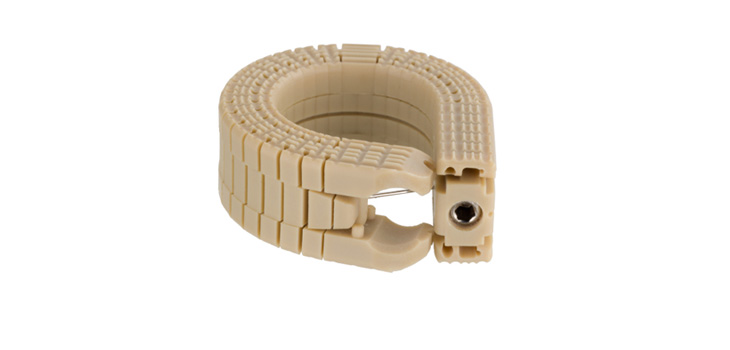
As indicated in the news release, “Luna 3D is a new expandable interbody designed for minimally invasive surgery (MIS), mini-open or open posterior approaches. Luna 3D’s controlled, atraumatic insertion through a 6-8 mm cannula is designed to minimize nerve retraction and mitigate implant migration. In-situ 3D expansion provides zero-impaction delivery, intended to preserve and protect vertebral endplates. Once in the disc space, Luna 3D expands to 25 mm in diameter and up to 13 mm in height. Bone graft is inserted into the Luna 3D cage after expansion, thereby optimizing this critical aspect of fusion surgery.”
Asked what kind of comments and/or questions they received at the recent NASS meeting, Rick Simmons, vice president, Sales & Marketing at Benvenue Medical, told OTW, “We received a lot of interest from surgeons at NASS in the launch of our Luna 3D Interbody Fusion System. We received questions about the training that is available, as well as questions about details on the limited rollout to date. Many surgeons told us they have been dissatisfied or not trialed previous expandable devices for the following reasons: large entry into tight spaces, lack of controlled placement, impaction required for placement, subsidence concerns, foot print limitations, volume of bone graft within device and minimal biologics after expansion. They commented that Luna 3D was a very thoughtful design, addresses several of these challenges and capabilities of posterior access fusion surgery with ALIF surgical principles. They also asked about the instrumentation that we have available to perform a thorough discectomy for placement of the Luna.”
As for next steps, Simmons commented, “Benvenue Medical is very focused on the full-scale product launch of Luna 3D and making sure the trainings go well. Some of what we have coming in the future include a lordotic version of the Luna, a new discectomy system, publication of biomechanical data and continuing to execute on our clinical data collection plans.”
Author
React:
Discussion
This is a fascinating development. In my practice we've seen similar outcomes with the revised protocol. The key differentiator seems to be patient selection criteria. Has anyone else noticed the correlation with BMI thresholds?
Great point. I'd push back slightly on the conclusion, the sample size in the cited study is too small to draw population-level inferences. That said, the directional signal is compelling and worth a larger RCT.
We implemented a similar approach last year. Early results are promising but we're still gathering 12-month follow-up data. Happy to share our protocol if anyone is interested.
Join the conversation
Orthopedic professionals are discussing this. Sign in and upgrade to read every comment and add your voice.