
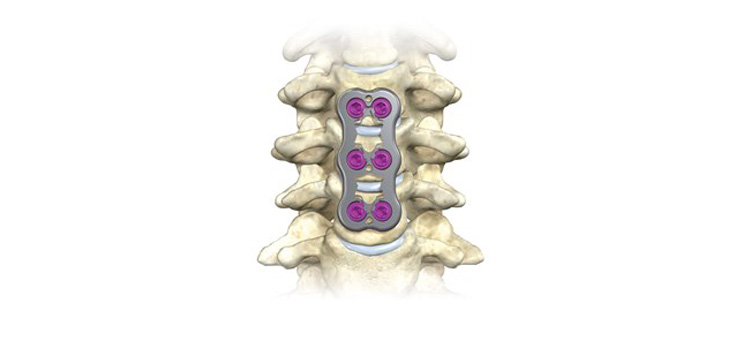
Xtant Medical Holdings, Inc., formerly known as Bacterin and X-Spine, announced on September 9, 2015 that the company’s Aranax Cervical Plate has been cleared for the market by the FDA.
Xtant Medical Receives FDA Clearance for Cervical Plate
1 min read Premium comments
Secondary
The company says the implant is the “latest generation of anterior cervical fixation with an enhanced locking mechanism, low profile features, increased screw angulation and intuitive instrumentation.”
Last year, there were approximately 220, 000 cervical plating procedures performed in the U.S., according to the 2015 iData report. The company says its addressable market for Aranax exceeds $160 million in the U.S.
Indications for the Aranax implant include fusion on one to four contiguous levels of the cervical spine, through an anterior approach (C1-C7 inclusive). The company claims the sterile packaging will reduce facility processing costs for hospitals and improve procedure planning. Aranax project team member, neurosurgeon Brandon Scott, M.D., stated, “The pre-packaged sterile implants and streamlined instrumentation are both beneficial and convenient. This translates to a direct cost savings for facilities while maintaining continuity of care for patients.”
According to Spine-Health, the application of an anterior cervical plant can add considerable stability to the spinal construct. The plates were developed in the 1980s when their use was restricted to long fusions. Surgeons are now also using them for single level procedures and it has become commonplace for surgeons to use a plate as a routine addition to a cervical fusion.
The company will make the system available to a limited list of surgeons in the fourth quarter of 2015, with a full launch following in early 2016.
Author
React:
Discussion
This is a fascinating development. In my practice we've seen similar outcomes with the revised protocol. The key differentiator seems to be patient selection criteria. Has anyone else noticed the correlation with BMI thresholds?
Great point. I'd push back slightly on the conclusion, the sample size in the cited study is too small to draw population-level inferences. That said, the directional signal is compelling and worth a larger RCT.
We implemented a similar approach last year. Early results are promising but we're still gathering 12-month follow-up data. Happy to share our protocol if anyone is interested.
Join the conversation
Orthopedic professionals are discussing this. Sign in and upgrade to read every comment and add your voice.