
Graftys, S.A., a company founded in 2005 and based in the university town of Aix-En-Provence, France, has a line of innovative biomaterials has received authorization to commercialize two new cements to treat bone marrow lesions caused by traumatic injury.
Subchondral Bone Marrow Lesion Cement Ok’d In Europe
1 min read Premium comments
Secondary
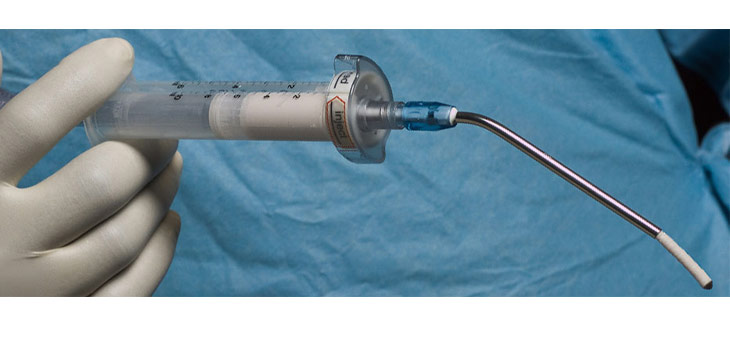
The new cements are brandnamed Graftys HBS and Graftys Quickset. Both, say the company, are injectable and resorbable calcium phosphate cements. Their indicated use is for treating subchondral bone marrow lesions. Also known as bone marrow edema, the ailment results in loss of bone volume, micro fractures and a decline of mechanical strength of the subchondral bone above or below the knee joint
“When these bone marrow lesions occur in the subchondral condyle or under the tibial plateau, they can create pain and lead to total knee replacement once traditional treatments fail, ” said Jean-Marc Ferrier, Vice President of Clinical and Regulatory Affairs, Graftys S.A. “This new surgical treatment, which involves minimally invasive injection of calcium phosphate cement, under radiographic guidance, can provide orthopedic surgeons with a new and less invasive method of treatment for patients who suffer from this type of subchondral pain.
Graftys now has four CE approvals in Europe and three FDA 510(k) clearances.
Author
React:
Discussion
This is a fascinating development. In my practice we've seen similar outcomes with the revised protocol. The key differentiator seems to be patient selection criteria. Has anyone else noticed the correlation with BMI thresholds?
Great point. I'd push back slightly on the conclusion, the sample size in the cited study is too small to draw population-level inferences. That said, the directional signal is compelling and worth a larger RCT.
We implemented a similar approach last year. Early results are promising but we're still gathering 12-month follow-up data. Happy to share our protocol if anyone is interested.
Join the conversation
Orthopedic professionals are discussing this. Sign in and upgrade to read every comment and add your voice.