
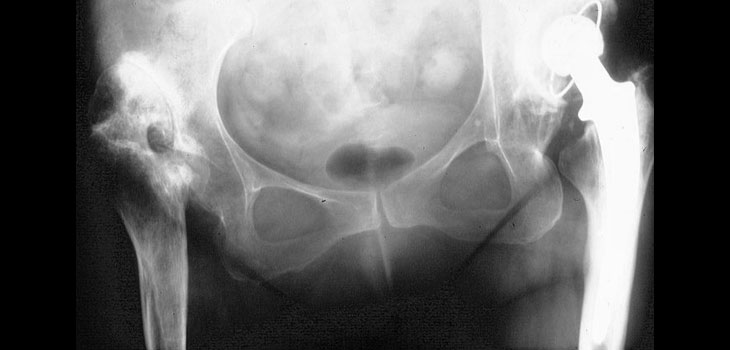
Patients with psoriatic arthritis undergoing total hip arthroplasty will find encouragement in a study that found they face no greater risk of poor outcomes than do patients who have the surgery because of osteoarthritis.
Psoriatic Arthritis No Bar to Joint Replacement
1 min read Premium comments
Secondary
Andrew Smith, writing in the publication MD, reported on what was a complicated study. Researchers began by comparing results for 63 psoriatic arthritis patients with 153 who had cutaneous psoriasis and osteoarthritis and a large cohort of patients who suffered from osteoarthritis alone.
They found that the patients with psoriatic arthritis suffered significantly more co-morbidities than did patients with osteoarthritis alone. In addition, they were more likely to be obese, more likely to be current or former smokers and slightly more likely to be male. In terms of race, education level and other factors the groups were similar.
Patients from all three groups scored about the same before their procedures on the Western Ontario and McMaster Universities Osteoarthritis Index (WOMAC) of pain and function, and they posted similar WOMAC scores when they were measured again after their procedures. They found that patients with psoriatic arthritis and psoriasis/osteoarthritis scored worse than those with osteoarthritis alone.
However, Smith reported that “after regression analysis that controlled for potential confounders, these apparent discrepancies disappeared and patients from all three groups enjoyed similar outcomes after their hip replacements.” Members of all three groups expressed similar levels of satisfaction with the results of their operations.
The study authors wrote in the journal Arthritis & Rheumatology that: “Neither psoriatic arthritis nor cutaneous psoriasis in conjunction with osteoarthritis are risk factors for poor outcomes after total hip arthroplasty. This is important information to convey to psoriatic arthritis and psoriasis patients contemplating total hip arthroplasty.”
Author
React:
Discussion
This is a fascinating development. In my practice we've seen similar outcomes with the revised protocol. The key differentiator seems to be patient selection criteria. Has anyone else noticed the correlation with BMI thresholds?
Great point. I'd push back slightly on the conclusion, the sample size in the cited study is too small to draw population-level inferences. That said, the directional signal is compelling and worth a larger RCT.
We implemented a similar approach last year. Early results are promising but we're still gathering 12-month follow-up data. Happy to share our protocol if anyone is interested.
Join the conversation
Orthopedic professionals are discussing this. Sign in and upgrade to read every comment and add your voice.