
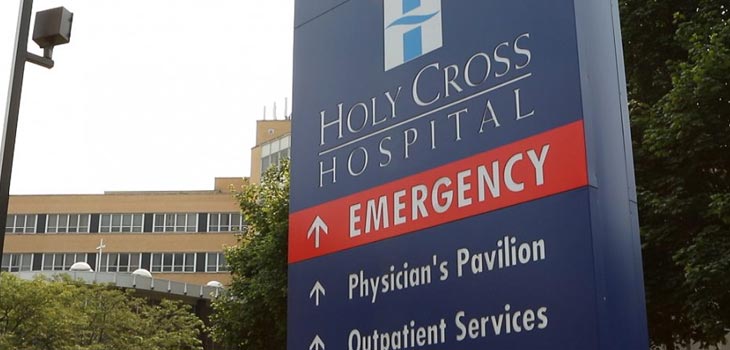
Sinai Health System and the University of Chicago Medicine are collaborating on a massive new effort to create a more comprehensive system of needed trauma and emergency care for Chicago’s South and Southwest side communities. The result? A Level 1 adult trauma center located at Holy Cross Hospital, part of the Sinai Health System.
New Level 1 Trauma System Coming to Chicago
2 min read Premium comments
Secondary
Doug Dirschl, M.D., orthopedic trauma surgeon and chair of the Department of Orthopaedic Surgery at the University of Chicago Medicine, told OTW, “The University of Chicago Medicine (UCM)-Sinai Health System (SHS) level 1 adult trauma center at Holy Cross Hospital (HCH) will be built and staffed to provide the highest level of trauma care to patients from a broad geography of Chicago’s South Side. The collaborative partnership between the two institutions will enable the provision of every form of orthopedic trauma care, from urgent lifesaving procedures to complex reconstruction. Medical staffs from SHS, UCM and HCH all will work together in the facility, and all will participate jointly in establishing and meeting high quality standards. Orthopedic surgeons from UCM will be on-site at HCH each day of the week.”
“The opening of the level 1 adult center at HCH will be a critical component of what will be a comprehensive system for the delivery of trauma and emergency care. In addition to the adult trauma center at HCH, the level 1 pediatric trauma center at UCM’s Comer Children’s Hospital, the Critical Care Burn Unit at UCM, and expanded emergency departments at both UCM and HCH will comprise a comprehensive system that will expand emergency care in this portion of Chicago.”
Asked how he sees the project progressing, Dr. Dirschl noted, “Numerous steps are necessary to achieve the comprehensive solution the two organizations announced last week. First, we need to secure regulatory approval for the expansion and constructions at both HCH and UCM. We then will be deep into planning for the construction project at HCH, a process that will involve a great deal of clinician input. We will begin to work together with SHS and HCH physicians to develop a detailed model for staffing, clinical governance, and quality reporting; this model will assure strong collaboration and the highest quality and outcomes for our patients. Finally, we will begin recruiting and training physicians and staff who will work in the HCH facility.
“It is all exciting stuff, in no small part because we have the opportunity to design this trauma center from the ground up, designing both a facility and a model of care from the very beginning. Most trauma centers have to ‘retrofit’ the program, both into existing facilities and an existing staff and physician culture; we will be able to design both from the very start, and the outcome should be a program that is extremely collaborative and of outstanding quality.”
Gary Merlotti, M.D., trauma surgeon and Chair of the Department of Surgery at Mount Sinai Hospital, told OTW, “Training and educating the staff also will be ongoing in the first year as the manpower needs are defined and filled.”
Author
React:
Discussion
This is a fascinating development. In my practice we've seen similar outcomes with the revised protocol. The key differentiator seems to be patient selection criteria. Has anyone else noticed the correlation with BMI thresholds?
Great point. I'd push back slightly on the conclusion, the sample size in the cited study is too small to draw population-level inferences. That said, the directional signal is compelling and worth a larger RCT.
We implemented a similar approach last year. Early results are promising but we're still gathering 12-month follow-up data. Happy to share our protocol if anyone is interested.
Join the conversation
Orthopedic professionals are discussing this. Sign in and upgrade to read every comment and add your voice.