
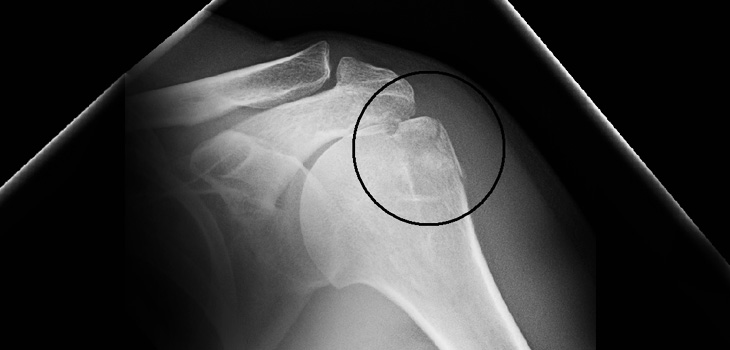
Officials of Conventus Orthopaedics, of Minneapolis, Minnesota, are celebrating the first surgeries in the U.S. and Europe that utilize their PH Cage for proximal humeral fractures. The company reports that these surgeries represent the first alternative to traditional treatment options for shoulder fractures.
First In-Human Cases: PH Cage for Proximal Humeral Fractures
1 min read Premium comments
Secondary
The company’s cage system, which takes advantage of the shape memory properties of Nitinol, expands within the bone to create strong fixation to prevent further collapse of the fracture. Company officials say that the PH Cage implant creates a rigid internal scaffold and stabilizes bone fragments.
“We are very excited to have successfully completed the first U.S. Conventus PH Cage procedures with. Paul Paterson, M.D. of Buffalo, New York, and. Edwin E. Spencer, Jr. M.D. of Knoxville, Tennessee in addition to our first German Conventus PH Cage procedures with Michael Jonas, M.D. in Moers, Germany. This innovative three dimensional fracture management technology was originally developed with proximal humerus fractures in mind, based upon the ability to achieve reliable 3D fixation in a less invasive manner, ” said Paul Buckman, Conventus Orthopaedics CEO.
“The Conventus PH Cage’s less invasive approach and versatility enables secure fixation within the proximal humerus where familiar techniques of open reduction, internal fixation and arthroplasty still have been shown to have limitations for proximal humerus repair, ” added Paterson.
Prior to the development of the PH Cage patients who had multiple fractures of their shoulders were limited to traditional fixation technologies or else to a replacement of the shoulder. Conventus officials report that their technology emphasizes preservation of tissues and blood supply at the fracture site while stabilizing bone fragments and facilitating early motion through less invasive procedures.
The company is in the process of a U.S. market introduction.
Author
React:
Discussion
This is a fascinating development. In my practice we've seen similar outcomes with the revised protocol. The key differentiator seems to be patient selection criteria. Has anyone else noticed the correlation with BMI thresholds?
Great point. I'd push back slightly on the conclusion, the sample size in the cited study is too small to draw population-level inferences. That said, the directional signal is compelling and worth a larger RCT.
We implemented a similar approach last year. Early results are promising but we're still gathering 12-month follow-up data. Happy to share our protocol if anyone is interested.
Join the conversation
Orthopedic professionals are discussing this. Sign in and upgrade to read every comment and add your voice.