
Charles Bush-Joseph, M.D., a sports medicine orthopedic surgeon and managing partner at Midwest Orthopaedics at Rush, has been elected to the presidential line for the American Orthopaedic Society of Sports Medicine (AOSSM). He is serving as vice-president for 2015, president elect for 2016 and president for 2017.
Charles Bush-Joseph, M.D. Now in Presidential Line for AOSSM
1 min read Premium comments
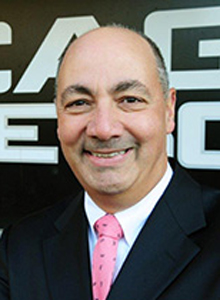
“I’ve been a member of the AOSSM for many years and have seen the impact it has made on sports medicine, ” explained Dr. Bush-Joseph in the August 28, 2015 news release. “I’m honored to be trusted by members to lead the organization over the next two years.”
Dr. Bush-Joseph has cared for high school, collegiate and recreational athletes for many years. He is the head team physician for the Chicago White Sox and associate team physician for the Chicago Bulls. Dr. Bush-Joseph was elected president of the Major League Baseball Team Physician Association for 2012.
Dr. Bush-Joseph, a professor at Rush University Medical Center and the Associate Director of the Rush Orthopaedic Sports Medicine Fellowship Program, told OTW, “I would envision my role as president would be to advance AOSSM’s mission of research and education to the benefit of all athletes. The society will continue to develop injury prevention strategies, advanced training methods, and innovative treatments that encourage all to participate in sports, fitness and competition. Collaboration and knowledge sharing with other international sports medicine societies will raise of the standard of care worldwide.”
“The most pressing issue in sports medicine is that we need to encourage our youth to participate in sports and fitness, yet insure player safety at every level. Overuse injuries and concussions continue to dominate our research interests.”
React:
Discussion
This is a fascinating development. In my practice we've seen similar outcomes with the revised protocol. The key differentiator seems to be patient selection criteria. Has anyone else noticed the correlation with BMI thresholds?
Great point. I'd push back slightly on the conclusion, the sample size in the cited study is too small to draw population-level inferences. That said, the directional signal is compelling and worth a larger RCT.
We implemented a similar approach last year. Early results are promising but we're still gathering 12-month follow-up data. Happy to share our protocol if anyone is interested.
Join the conversation
Orthopedic professionals are discussing this. Sign in and upgrade to read every comment and add your voice.