
Cartiva, Inc., a firm in Alpharetta, Georgia, has treated its first patient in a study of the safety and effectiveness of Cartiva’s Synthetic Cartilage Implant (SCI). It is used in the treatment of first carpometacarpal (CMC) joint osteoarthritis at the base of the thumb. The surgery was part of a study, led by principal investigator Erin Brown, M.D., Ph.D., F.R.C.S.(C), who performed the surgery in Vancouver at the University of British Columbia (UBC) Hospital.
Cartiva Implants First Thumb Study Patient
1 min read Premium comments
Secondary
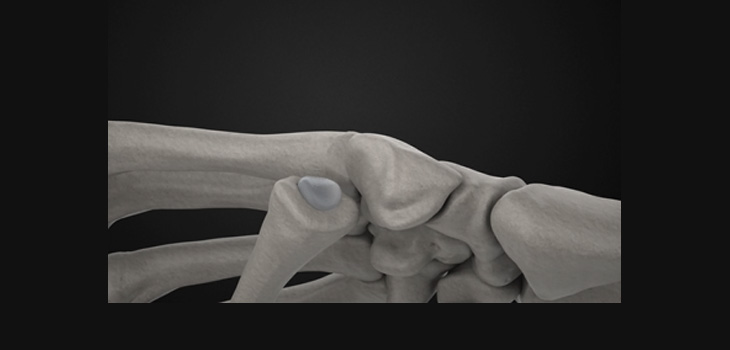
According to the news release, this procedure was also the first to utilize this Cartiva implant design, using implants and tools optimized for the specific curvatures of the CMC joint. Cartiva SCI is a proprietary hydrogel polymer device designed to mimic natural cartilage. The implant is used in the treatment of osteoarthritis in patients with diseased or damaged articular surface in the first CMC joint. Cartiva SCI is implanted in the metacarpal base, where its placement provides replacement for damaged cartilage without requiring the destruction or removal of a patient’s healthy tissue.
Osteoarthritis of the thumb CMC joint (also known as thumb basal joint arthritis), is a common and frequently debilitating condition that affects 8% to 12% of the general population, according to company officials, and as many as 33% of postmenopausal women.. The problem causes joint pain, swelling, instability, deformity, loss of motion and weakness, making it difficult to turn doorknobs or open jars. Surgical options for later-stage patients include joint fusion, total or partial trapeziectomy or arthroplasty.
“We are excited to be the first hospital to enroll a patient in this study, ” said Brown, clinical professor and director of Research, Division of Plastic Surgery at UBC. “The Cartiva device is implanted in a quick and straightforward procedure, and has the potential to restore grip and pinch strength following debilitating osteoarthritis of the CMC joint. I look forward to enrolling additional patients and following them on a longer-term basis, which will help examine the potential of this promising technology.”
Author
React:
Discussion
This is a fascinating development. In my practice we've seen similar outcomes with the revised protocol. The key differentiator seems to be patient selection criteria. Has anyone else noticed the correlation with BMI thresholds?
Great point. I'd push back slightly on the conclusion, the sample size in the cited study is too small to draw population-level inferences. That said, the directional signal is compelling and worth a larger RCT.
We implemented a similar approach last year. Early results are promising but we're still gathering 12-month follow-up data. Happy to share our protocol if anyone is interested.
Join the conversation
Orthopedic professionals are discussing this. Sign in and upgrade to read every comment and add your voice.