
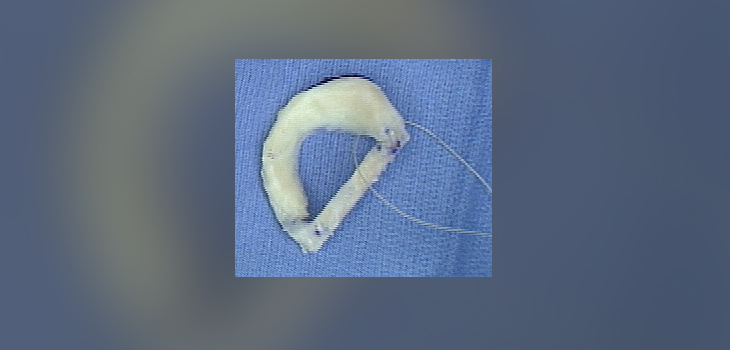
According to a new study, the majority of patients younger than age 50 who had a torn or severely damaged meniscus experienced reduced pain and improved knee function following transplant surgery. The study, just published in the Journal of Bone and Joint Surgery, also found that many patients had to undergo another surgery within 10 years.
Transplant Successful for Most Young Patients With Damaged Menisci
3 min read Premium comments
Secondary
Findings include: 63% of meniscal transplants were viable at 10 years; 11% of patients with successful transplants had pain during daily activities; 72% were able to take part in low-impact sports. In patients who required additional surgery, the meniscal transplants lasted between 7 and 8 years after surgery.
Frank R. Noyes, M.D., lead study author and founder of the Noyes Knee Institute at the Cincinnati Sports Medicine & Orthopaedic Center, told OTW, “Meniscus transplantation has been performed at our center for over 25 years and all patients are entered into our prospective studies of this procedure. I believed it was important from the very beginning to follow patients for the first few years after surgery with serial MRI studies to determine if the operative procedure realized its initial goal, which was to achieve adequate fixation of the transplant (preventing extrusion) to allow healing. Then, with longer follow-up, the assessment of knee symptoms, activity levels, and tibiofemoral compartment joint space (with weight-bearing posteroanterior radiographs) is required to determine the procedure’s impact on knee function. The final, 10+ year survivorship analysis allows the clinician to counsel patients on realistic long-term outcomes. I always understood and expressed to all patient candidates that the procedure is not curative, but that it may ‘buy’ several years before other operations may be required.”
“Before the operation, 70% of the patients had moderate pain with daily activities. An average of 11 years had elapsed from the original injury to the meniscus transplant, during which time, this group of 38 patients had undergone a total of 139 operations. At the time of the transplant procedure, abnormal articular cartilage surfaces were found in the majority of knees, including subchondral bone exposure in 53% and extensive fissuring and fragmentation in 37%. Therefore, the level of pain was not surprising.”
Asked which patients would not be candidates for this procedure, Dr. Noyes noted, “Contraindications for this operation include advanced knee joint arthritis with flattening of the femoral condyle, concavity of the tibial plateau, and osteophytes that prevent anatomic seating of the transplant. Patients with untreated lower limb axial malalignment (varus or valgus) who are not willing to undergo a corrective osteotomy, and patients with anterior cruciate ligament deficiency who are not willing to undergo a reconstruction are not candidates. Other contraindications include pre-existing knee arthrofibrosis, significant lower limb muscular atrophy, and a history of prior joint infection with subsequent arthritis. Symptomatic noteworthy patellofemoral articular cartilage deterioration (subchondral bone exposure) and obesity (body mass index > 30) are also contraindications. Finally, prophylactic meniscus transplantation following total meniscectomy is not recommended in asymptomatic patients who do not have articular cartilage deterioration.”
“The goals of meniscal transplantation are to restore partial load-bearing meniscus function, decrease symptoms, and provide some chondroprotective effects. However, it is important to note that the procedure continues to evolve, as investigations of tissue-processing, secondary sterilization, and long-term function evaluate its effectiveness. Unfortunately, many investigations report that most transplants gradually deteriorate, tear, extrude from their normal position, or shrink in size, thereby loosing the ability to provide function. Accordingly, the goal is to provide short-term benefits until a more suitable meniscus transplant is clinically available. At best, the transplant provides only partial function, and therefore, strenuous sports and high-impact activities are not advised postoperatively. Education of the patient and family is required so that all understand and accept the current limitations of the procedure. Importantly, I have promoted for many years repair of meniscus tears that extend into the central third region, including double-longitudinal, triple-longitudinal, radial, and flap tears that are too often removed. Preservation of meniscal tissue through repair is preferred over transplantation whenever possible.”
Author
React:
Discussion
This is a fascinating development. In my practice we've seen similar outcomes with the revised protocol. The key differentiator seems to be patient selection criteria. Has anyone else noticed the correlation with BMI thresholds?
Great point. I'd push back slightly on the conclusion, the sample size in the cited study is too small to draw population-level inferences. That said, the directional signal is compelling and worth a larger RCT.
We implemented a similar approach last year. Early results are promising but we're still gathering 12-month follow-up data. Happy to share our protocol if anyone is interested.
Join the conversation
Orthopedic professionals are discussing this. Sign in and upgrade to read every comment and add your voice.