
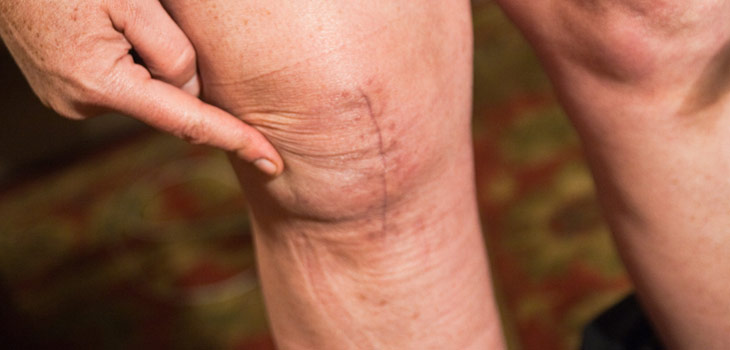
New research from the University of Nebraska Medical Center is indicating that when it comes to treating rheumatoid arthritis (RA) patients with total knee replacement (TKR), surgery is “highly effective.” The gains, however, were not as substantial as those for osteoarthritis (OA) patients who underwent the same procedure.
TKR in RA Patients: Highly Effective, But…
1 min read Premium comments
Secondary
According to the July 28, 2015 news release, the surgery was “highly effective in reducing knee pain and also provides benefits in other subjective quality of life indices in patients with rheumatoid arthritis.”
“The investigators concluded that total knee replacement can serve as a ‘time machine’ via which patients can return to a less disabled lifestyle, before the arthritic process catches up.”
“A new knee can give osteoarthritis patients 10 to 20 years of painless use, whereas rheumatoid arthritis continues to affect the joint soon afterward. It’s an important and effective treatment, but patients with rheumatoid arthritis shouldn’t expect the same, often-dramatic results experienced by their osteoarthritis counterparts, ” said Kaleb Michaud, Ph.D., senior author of the Arthritis & Rheumatology study, in the news release. “You’ve gotten rid of a knee plagued by arthritis, not the arthritis itself. Still, it’s an important option that can dramatically improve the patient’s quality of life.”
Asked what led to this work, Dr. Michaud told OTW, “A long history of hearing from patients about their total joint replacements. It’s often the final treatment they can get to relieve the pain and problems associated with their most affected joints.”
“There are many studies that show the problems and complications after TKR in patients with RA, yet we showed there was a powerful and positive impact, on average, for them in our study. I also expected the problems with the knee to be gradual over time, but we found that most patients with TKR got it done after a dramatic worsening within two years. Going forward we need to understand if the various changes in DMARD (disease-modifying antirheumatic drugs) and NSAID (nonsteroidal anti-inflammatory drugs) treatment around the TKR in patients with RA affect the outcomes with this surgery.”
Author
React:
Discussion
This is a fascinating development. In my practice we've seen similar outcomes with the revised protocol. The key differentiator seems to be patient selection criteria. Has anyone else noticed the correlation with BMI thresholds?
Great point. I'd push back slightly on the conclusion, the sample size in the cited study is too small to draw population-level inferences. That said, the directional signal is compelling and worth a larger RCT.
We implemented a similar approach last year. Early results are promising but we're still gathering 12-month follow-up data. Happy to share our protocol if anyone is interested.
Join the conversation
Orthopedic professionals are discussing this. Sign in and upgrade to read every comment and add your voice.