
Who ARE these people?
The Ultra Patient
8 min read Premium comments
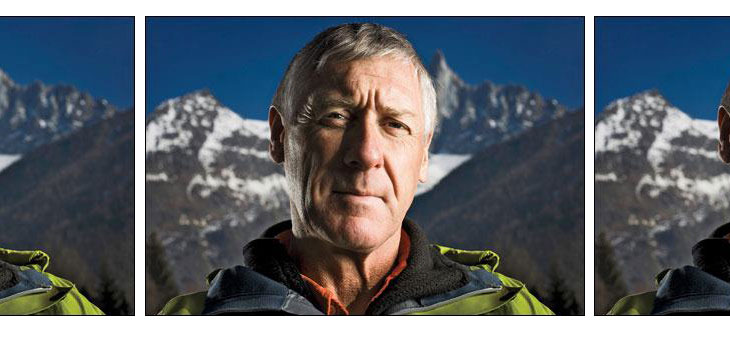
They are your ultra-patients—like Ellen Miller, who climbed Everest, Nuptse and Lhotse after her hip replacement, or Roy Wyatt who climbed Kilimanjaro at age 75 after his hip surgery, or Scotland’s John Matthews who at age 71 is taking on Ben Macdui mountain or Don Healey, who at the comparatively young age of 62 climbed Mount Everest. All these patients (and more) were able to accomplish these incredible feats with artificial hips.
Thomas Sculco, M.D., said this about his ultra-patient, Don Healy: “With the increased knowledge we have today regarding joint replacement techniques, a patient like Don Healy can expect a full recovery. And, as seen in Don’s case, if a patient is motivated and determined, he or she can do just about anything following hip arthroplasty.”
Doctor, Can I Climb a Mountain?
Ellen Miller, who at the young age of 54 became the first American woman to climb the three highest mountains in Nepal—the so-called Everest trilogy of Nuptse, Lhotse and Everest—did the final leg of her remarkable achievement with the benefit of an artificial hip.
Roy Wyatt had his hip replacement surgery when he was 74 years old. In 2007, the retired banker but active runner, biker and hiker climbed Mount Kilimanjaro. Then he went back to his surgeon, had ANOTHER hip replacement and proceeded to celebrate his new joint by hiking up Denali in 2008, the highest peak in North America at 20, 320 feet. Later that same year he and his 55-year-old son flew to La Paz, Bolivia, and climbed two of the tallest peaks in the Andes.
This year, 71-year old John Matthews announced that he planned to climb Great Britain’s second highest peak, Ben Macdui, with the CEO of the manufacturer of his implant. (Interesting precedent. Wonder if other implant company CEO’s would do the same?).
And finally, one of Tom Sculco’ s patients, Don Healy famously climbed Mount Washington in spring of 2007, then Mount Baker in the Northern Cascades, then Mount Rainier, Denali, Kilimanjaro and finally Everest in the years following his surgery.
What do all of these ultra patients have in common?
In a nutshell, they don’t take “no” for an answer—and they won’t believe you if you say they can’t climb a mountain with an artificial hip.
If at First You Don’t Succeed…Get Another Surgeon
Don Healy was a candidate for a hip replacement after breaking his hip in a biking accident in New Hampshire. Nine months after having his hip pinned and hobbling around on crutches with no discernible improvement he sought advice from an orthopedist near his home in New York City. That doctor recommended a hip replacement. When Healy asked if he could still go after his life time goal of climbing Mount Everest, that doctor said “no.” Furthermore, said the surgeon, Healy would probably have his range of motion limited to such an extent that he could not squat.
So Healy went for a second opinion.
He visited Dr. Thomas Sculco at Hospital for Special Surgery (HSS) in New York. Dr. Sculco, a frequent debater at the CCJR meetings and ranked as one of the most proficient and safest orthopedic surgeons in New York City, pored over Healy’s X-rays and then told Healy that post-surgery, climbing mountains was not necessarily out of the question. In fact, Sculco assured Healy, he would be able to squat.
John Matthews, the Scottish hiker who wanted to climb Great Britain’s second highest peak, asked Mike Tuke, chairman of MatOrtho, a British medical device manufacturer based in Leatherhead, Surrey, to join him. When a local reporter asked Tuke about his ambitious hip replacement friend he said, “Generally speaking we don’t encourage patients to do more than they should, but actually what happens is that patients go and do what they feel they can do and if you tell them not to do something that sets up a challenge.”
“Staying active is the best way to live longer so joint replacement is a vital life extender and it is very satisfying to be in a business that is a life changing operation.”
Probably the best reaction came from Roy Wyatt’s surgeon, Dr. David J. Covall, who was quoted as saying this about his very unusual patient: “Obviously, Mr. Wyatt is not our typical hip replacement patient. He’s an amazing guy. The fact that he was so active before his surgery and so motivated played an important role in his recovery afterwards.”
Less Risky Than Driving on the Interstate
Of course, total joint reconstruction is not only one of the most commonly performed surgeries in the world but one of the most routinely successful. Said Dr. Covall, “Almost 95% of my patients go home from the hospital the day after surgery.” It is, he said, “probably less risky than driving on Interstate 285.”
And if your patient is athletic and interested in extreme sports, then, as a physician, it may well be a good opportunity to let your patient be your guide.
Ellen Miller, who was a mountain runner and fitness coach before her hip replacement, was certainly a very unusual patient. As she described it to Denver Post writer John Meyer in August 2013 “The trilogy was kind of my final hurrah, ” said Miller. “At my age, I simply can’t manage the discomforts of an extreme high-altitude expedition as well as I used to be able to. The cold…the discomfort, it’s just gotten harder for me as I’ve gotten older. I don’t feel like I’ve gotten much slower climbing the mountain, but managing that discomfort has become more difficult.” (http://www.denverpost.com/boxing/ci_23801557/vail-climber-is-first-american-woman-complete-everest)

The trilogy she is describing is the Everest trilogy—which means climbing the two mountains adjacent to Everest in addition to Everest. She climbed Everest via the north face in 2001 and the southeast ridge in 2002. She had hip replacement surgery in 2008, climbed Lhotse (27, 940 feet) in 2009 and had the other hip replaced later that year. She climbed Nuptse (25, 791 feet) on May 16, five years to the day after her first hip replacement.
“It’s very interesting; as soon as you get off the Everest highway and hang that right, very few signs of people at all, ” Miller said. “The views of Everest and Lhotse from there were incredible, and I realized that’s a view that very few people have had the opportunity to see because not many people walk over there. That, in and of itself, was a magnificent experience.”
A Pattern of Embracing Challenge

Looking back, Roy Wyatt of Lilburn, Georgia didn’t think hip replacement was such a big deal. As he characterized it for the Resurgens Orthopaedics Clinic website, it was as quick and easy as having a tooth pulled. Approximately a week after his first THR, he was exercising at the “Y” and about six months later running in the 10K Peachtree Road Race (the largest in the world and now 46 years running). Again, it was Roy’s 14th in a row.
Later, he completed the six-day, 440-mile bicycle ride in September along the Natchez Trace from Nashville, Tennessee, to Natchez, Mississippi.
As he told the Resurgeons clinic newsletter; “When you get old, you have two choices. You either do it, or you sit. I’ve always flown airplanes, raced motorcycles, and exercised, and I have no intention of slowing down.”
Don Healy’s Story
Here is Don Healy’s story as covered in the Hospital for Special Surgery website.
Don Healy had lived the sedentary life of a business owner until he turned 60 in May of 2005. Suddenly he felt like a couch potato. “I had gone up a couple of waist sizes and I started to feel sluggish, ” he recalls. A year later he began seriously working out. He shed 25 pounds and set the goal of scaling Mt. Everest, which had been a childhood dream, by the time he reached his 65th birthday. He mapped out the peaks he’d need to scale in preparation, and began training in earnest. He made his first journey above the tree line on a. Five days before the expedition, a broken hip from a bicycle accident stopped him in his tracks. The day of the accident Don feared he wouldn’t be able to walk again, much less climb high peaks.

Two weeks after his meeting with Dr. Sculco, Don went in for surgery. During the total hip replacement, the cup-shaped hip socket and the ball of the thigh bone were replaced with a ceramic ball and titanium stem and a socket. Within a day, he was walking with a cane and working with a physical therapist. After two weeks of therapy, Don was taking short walks around the block. Soon he was adding training to his physical therapy sessions. “I would complete my therapy and then stay for an extra hour and work on my upper body strength to maintain my fitness, ” he continues. After six weeks, Dr. Sculco lifted his hip precautions. “He said, ‘You are free to do whatever you want, ’” recalls Don. “At first I didn’t feel comfortable trying to do too much so I paced myself, ” he continues. Three months following his surgery, Don resumed climbing and scaled the Gros Piton, an elevation of 2, 600 feet in St. Lucia in the Caribbean. “My hip was fine, ’ he said.
Several weeks later, he’d made it up Mt. Adams in New Hampshire and then within a year of his accident, he’d climbed Mount Rainier. “My broken hip made me more determined than ever, ” he says. “I wanted to demonstrate that neither age nor physical setbacks need to limit one’s goals.”
In 2009, he reached the summit of Mount Kilimanjaro in Tanzania and then Denali, in Alaska, (formerly called Mount McKinley) a requirement before attempting Mt. Everest. In May 2010, Don Healy became one of the oldest Americans to reach the top of Mount Everest. Says Don, “Even though Dr. Sculco said I’d be able to make the climb, I think even he was surprised to learn that I had done it.”
Don dedicated his climb to the Hospital and Rehabilitation Center for Disabled Children in Katmandu, Nepal. The Center specializes in orthopedic surgery for children from rural areas and treats congenital deformities such as clubbed feet, as well as improperly healing broken bones, burns and metabolic bone disease. Don has pledged $29, 035 (one dollar for every foot he climbed) with the help of family and friends to the American Himalayan Foundation, an organization that provides education, health care and preservation services in the Himalayan region. The donation will support the Hospital, which also treats young patients through three satellite centers and makes visits to children to provide needed physical therapy”
What Ultra Patients Mean for You
They are a mixed bag. Any physician who approaches these patients with an authoritarian, omniscient approach will be disappointed. Yes, honest communication would seem to demand that the physician fully disclose all risks and limitations inherent in large joint reconstruction surgery. Further, after thousands of cases, any experienced surgeon will speak with well-earned authority. But ultra-patients are accustomed to uncharted territory. They present an intriguing shift in the patient/physician communication model. To them even the tallest mountains are mere obstacles to overcome. What’s a surgeon by comparison? The key, naturally, is to collaborate and help them scale their personal mountains so they can later tackle even greater challenges courtesy of your excellent treatment.
Author
React:
Discussion
This is a fascinating development. In my practice we've seen similar outcomes with the revised protocol. The key differentiator seems to be patient selection criteria. Has anyone else noticed the correlation with BMI thresholds?
Great point. I'd push back slightly on the conclusion, the sample size in the cited study is too small to draw population-level inferences. That said, the directional signal is compelling and worth a larger RCT.
We implemented a similar approach last year. Early results are promising but we're still gathering 12-month follow-up data. Happy to share our protocol if anyone is interested.
Join the conversation
Orthopedic professionals are discussing this. Sign in and upgrade to read every comment and add your voice.