
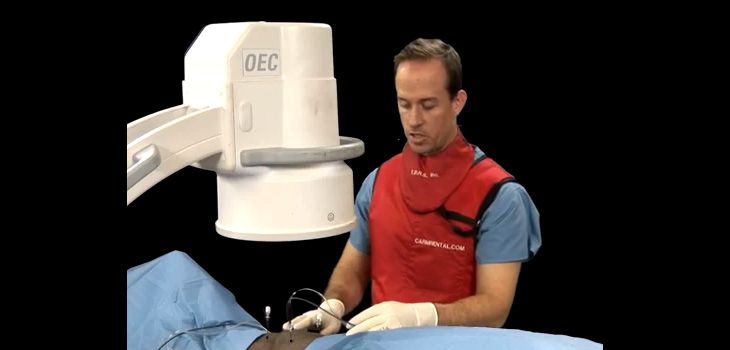
A new study has found that cooled radiofrequency (RF) ablation—with the tool known as COOLIEF—provides long-term relief of knee pain after total knee replacement (TKR). The researchers, whose work was published in Pain Practice, indicate that this is the first piece of published literature supporting the use of cooled RF for the knee after TKR.
Study: RF Ablation Relieves Pain After TKR
2 min read Premium comments
Secondary
Robert D. Menzies, M.D., is with Southwest Sports and Spine Center and Director of Pain Medicine at John Peter Smith Hospital in Fort Worth, Texas. He told OTW, “We’ve used Radiofrequency ablation technology safely in the spine for many years. Essentially, using the same philosophy of burning small peripheral nerves responsible for pain transmission in joints such as the knees seemed like an option to pursue.”
“I was surprised to see that this gentleman who had such limitations in simple daily activities was so greatly impacted by a simple procedure. He had stated upon presentation that he could barely walk 100 yards without significant knee pain, and had limited quality of life which led to depression and frustration. He had undergone a TKR over a year ago, but his orthopedist kindly informed him that the hardware was correctly positioned, there was no infection, and he’d completed his therapy as prescribed. Yet, after the 15 minute outpatient procedure, his limitations were significantly improved for 6-9 months.”
Dr. Menzies added, “It’s vitally important to know that we’re not stealing patients from our orthopedic colleagues. TKR is still the gold standard in patients who have chronic knee pain despite failed conservative treatments; however, not everyone is a TKR candidate, and certain factors, such as being too old, too young, overweight, or having certain medical conditions precludes them from proceeding with the replacement. Or, in the case of this patient, who had already had a TKR, and continued to have chronic pain, there were no other options his orthopedist could offer. For these patients, this could be a possible solution.”
Kerry Lawson, a patient who has undergone COOLIEF, told OTW, “After treatment, I was up and walking around about a day later. I’ve been pain free in both of my knees since then.”
“I had chronic pain in both of my knees, which inconvenienced me at work (I’m a college professor) and at home. I couldn’t walk, I couldn’t exercise, I couldn’t do simple things such as going out with my children or grandchildren without pain.”
“I had both of my knees replaced, but the pain continued and my knees were still hot and swollen. I even had my right knee replaced again. I tried everything to relieve the pain. From physical therapy, to every sort of prescription drug. I tried cortisone injections, but even that would only ease my pain for a couple of days.”
“Finally I saw a chronic pain specialist and he suggested COOLIEF Cooled Radiofrequency (RF). COOLIEF gave me hope. Since having the treatment, I still remain pain free and more importantly, I’m back to enjoying my life. I’ve improved my mobility, been on family trips, and haven’t had any problems with my knees. I would recommend COOLIEF to anyone living with pain. If you’ve tried everything and don’t want to continue to live on pain medication, COOLIEF beats the alternatives by a long shot.”
React:
Discussion
This is a fascinating development. In my practice we've seen similar outcomes with the revised protocol. The key differentiator seems to be patient selection criteria. Has anyone else noticed the correlation with BMI thresholds?
Great point. I'd push back slightly on the conclusion, the sample size in the cited study is too small to draw population-level inferences. That said, the directional signal is compelling and worth a larger RCT.
We implemented a similar approach last year. Early results are promising but we're still gathering 12-month follow-up data. Happy to share our protocol if anyone is interested.
Join the conversation
Orthopedic professionals are discussing this. Sign in and upgrade to read every comment and add your voice.