
An investigational drug for a rare orthopedic tumor is showing promise, says a new study in The New England Journal of Medicine (NEJM). According to this research, PLX3397, an oral targeted CSF-1R inhibitor, led to prolonged tumor regressions in most patients with tenosynovial giant cell tumor (TGCT), a disease that affects the joint or tendon sheath. The research was performed at Memorial Sloan Kettering Cancer Center.
Study: CSF-1R Inhibitor Induced Tumor Regressions
2 min read Premium comments
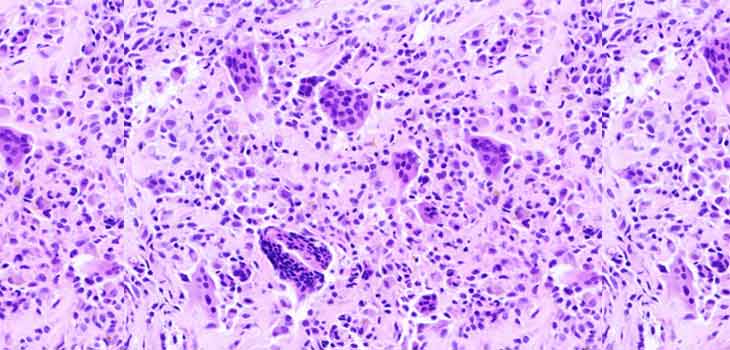
Secondary
“TGCT can be a very difficult disease to manage, with treatment options largely limited to surgery to remove as much of the tumor as possible. Despite the best surgical intervention, recurrence of diffuse TGCT is high and the disease may advance to the point where surgery is no longer an option, ” said William D. Tap, M.D., lead author of the study and chief of the Sarcoma Medical Oncology Service at Memorial Sloan Kettering Cancer Center, in the July 29, 2015 news release. “These preliminary results demonstrate that by targeting CSF-1R, PLX3397 may inhibit tumor growth in some patients with TGCT, potentially offering those patients an alternative non-surgical treatment option.”
Dr. Tap told OTW, “I was surprised to find how dramatically the drug helped patients. The results of the Phase I trial are opening up the door for a huge research collaboration surrounding TGCT. There are still numerous questions regarding the use of the drug and how to best serve this patient population. There is also a new basic science component to this work that is trying to better understand TGCT, why it develops and how to prevent it. One amazing aspect of this project is the close collaborative effort between multiple medical disciplines, especially medical and orthopedic oncology.”
John H. Healey, M.D., chief of Memorial Sloan Kettering’s Orthopaedic Service, told OTW, “PLX 3397 is transforming the way we approach what has been a very discouraging disease where we had limited treatment options, and surgery had an unacceptably high recurrence rate. Rapid dramatic responses were commonly seen, and any necessary surgery was less extensive. This drug gives new hope to patients and their doctors.”
Daiichi Sankyo, Inc. Plexxikon, members of the Daiichi Sankyo Group, are the developers of PLX3397.
Author
React:
Discussion
This is a fascinating development. In my practice we've seen similar outcomes with the revised protocol. The key differentiator seems to be patient selection criteria. Has anyone else noticed the correlation with BMI thresholds?
Great point. I'd push back slightly on the conclusion, the sample size in the cited study is too small to draw population-level inferences. That said, the directional signal is compelling and worth a larger RCT.
We implemented a similar approach last year. Early results are promising but we're still gathering 12-month follow-up data. Happy to share our protocol if anyone is interested.
Join the conversation
Orthopedic professionals are discussing this. Sign in and upgrade to read every comment and add your voice.