
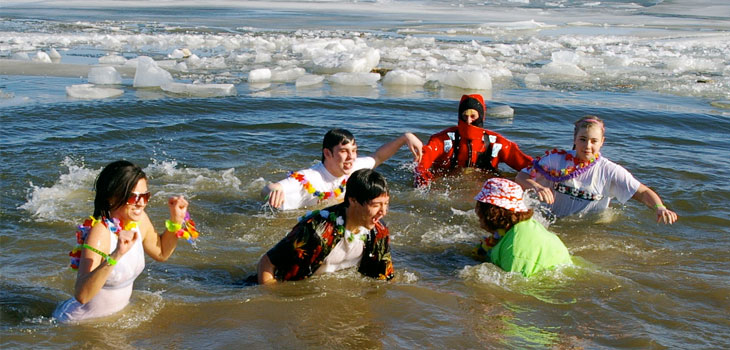
Can freezing the body—making it very, very cold for a short period of time—promote healing? It may not be surprising that Minneapolis, Minnesota, where enthusiasts jump into lakes through holes in the ice, is the home of a trend called: “whole-body cryotherapy.” Though the treatment has advocates, Ben Bartenstein, a writer for Pioneer Press Health called it “more commercial than charitable.”
Startups Test Freezing Therapy
1 min read Premium comments
Secondary
The therapy dates back to the 1800s in Japan. In 1978, Dr. Toshima Yamauchi created a whole-body cryosauna which a Polish company developed into a commercial product. It became popular in Poland where doctors believed that the cryosauna relieved pain and boosted the performance of Olympic athletes.
Brandon Johnson, a former pro-basketball player, is the owner of The Locker, a cryotherapy spa in Minneapolis. He acquired his equipment from Juka, a Polish company that sells the machine to health clubs. Johnson told Bartenstein, “The biggest thing is its natural. It forces the body into a healing state that you cannot go into in any other place without a downside.”
Many in the medical community say the therapy’s purported health benefits are inconclusive. Polish researchers have suggested that whole-body cryotherapy could be useful as a short-term treatment for anxiety disorders and a French team found the therapy to be effective in reducing muscle inflammation.
A well-known supporter of the treatment is famed sports medicine doctor James Andrews, M.D., who operated on Michael Jordan, Brett Favre and Adrian Peterson. Andrews is presently chairman of an Atlanta-based cryotherapy startup and plans to research the efficacy of cryosaunas compared with traditional rehab.
Author
React:
Discussion
This is a fascinating development. In my practice we've seen similar outcomes with the revised protocol. The key differentiator seems to be patient selection criteria. Has anyone else noticed the correlation with BMI thresholds?
Great point. I'd push back slightly on the conclusion, the sample size in the cited study is too small to draw population-level inferences. That said, the directional signal is compelling and worth a larger RCT.
We implemented a similar approach last year. Early results are promising but we're still gathering 12-month follow-up data. Happy to share our protocol if anyone is interested.
Join the conversation
Orthopedic professionals are discussing this. Sign in and upgrade to read every comment and add your voice.