
CyMedica Orthopedics, Inc., has received a CE mark for its QB1 Muscle Activation System. The system received clearance from the U.S. FDA in April 2015.
Muscle Atrophy Device Gets CE Mark
1 min read Premium comments
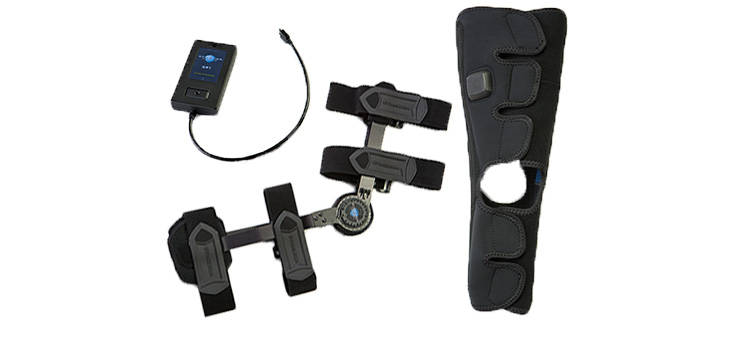
Secondary
“Securing the CE Mark for the QB1 System marks an important milestone for our company, greatly expanding our market opportunity to patients in Europe and paving the way for a global sales and distribution network. We are excited to have the clearance to deliver our revolutionary technology to millions of patients outside of the United States, ” said CyMedica President and CEO Rob Morocco.
The OB1 is designed to help patients suffering from quadriceps muscle atrophy—a weakening of the major leg muscles after anterior cruciate ligament (ACL) and total knee replacement surgery. The company maintains that quad atrophy can significantly slow healing and affect a patient’s activities, leaving them prone to delayed rehabilitation and further injury.
The press release states that the QB1 incorporates this patented technology with a postoperative knee brace to bring rehabilitation therapy into a patient’s home. Company officials state that this enables all knee patients to potentially improve their quad strength markedly faster and more comfortably than with other methods.
CyMedica Orthopedics, Inc. is based in Scottsdale, Arizona. It is a privately held medical device company that develops and commercializes products that target muscle atrophy using the firm’s platform technology. That technology includes “the first closed-loop power control system” to provide patients what the company calls “comfortable yet aggressive treatment.”
Author
React:
Discussion
This is a fascinating development. In my practice we've seen similar outcomes with the revised protocol. The key differentiator seems to be patient selection criteria. Has anyone else noticed the correlation with BMI thresholds?
Great point. I'd push back slightly on the conclusion, the sample size in the cited study is too small to draw population-level inferences. That said, the directional signal is compelling and worth a larger RCT.
We implemented a similar approach last year. Early results are promising but we're still gathering 12-month follow-up data. Happy to share our protocol if anyone is interested.
Join the conversation
Orthopedic professionals are discussing this. Sign in and upgrade to read every comment and add your voice.