
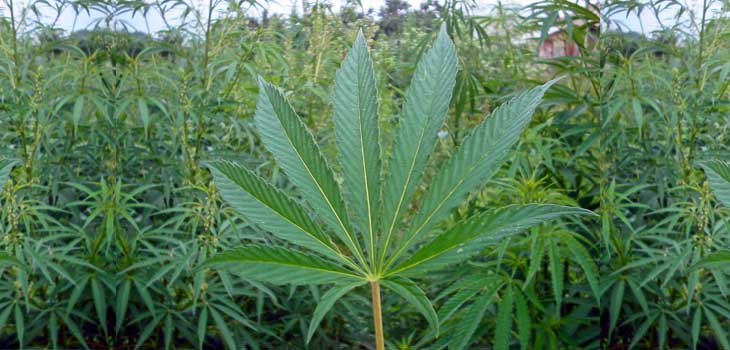
Bones heal faster when treated with a component of marijuana, according to a study at Tel-Aviv University in Israel. The helpful ingredient is cannabidiol (CBD), a non-psychotropic component of the marijuana plant. Results of the study are published in the Journal of Bone and Mineral Research.
Marijuana Helps Heal Bones Faster
2 min read Premium comments
Secondary
The results of the study were not a surprise. Previous work had demonstrated that bone formation is triggered by cannabinoid receptors that help to prevent the loss of bone. They also found that skeletons, in general, appear to be is managed by cannabinoids.
Researchers from Tel Aviv University injected one group of rats that had mid-femoral fractures with cannabidiol. A second group received both CBD and tetrahydrocannabinol (THC), the psychoactive component of marijuana. Within eight weeks the rats that received only CBD exhibited significant healing. The researchers found that CBD by itself made bones heal more quickly and come back stronger than before.
The authors of the study (Kogan NM, Melamed E, Wasserman E, Raphael B, Breuer A, Stok KS, Sondergaard R, Escudero AV, Baraghithy S, Attar-Namdar M, Friedlander-Barenboim S, Mathavan N, Isaksson H, Mechoulam R, Müller R, Bajayo A, Gabet Y, Bab I) wrote:
“Cannabinoid ligands regulate bone mass, but skeletal effects of cannabis (marijuana and hashish) have not been reported. Bone fractures are highly prevalent, involving prolonged immobilization and discomfort. Here we report that the major non-psychoactive cannabis constituent, cannabidiol (CBD), enhances the biomechanical properties of healing rat mid-femoral fractures. The maximal load and work-to-failure, but not the stiffness, of femurs from rats given a mixture of CBD and Δ9 -tetrahydrocannabinol (THC) for 8 weeks were markedly increased by CBD. This effect is not shared by THC (the psychoactive component of cannabis), but THC potentiates the CBD stimulated work-to-failure at 6 weeks post fracture followed by attenuation of the CBD effect at 8 weeks. Using micro-computed tomography (μCT), the fracture callus size was transiently reduced by either CBD or THC 4 weeks after fracture but reached control level after 6 and 8 weeks. The callus material density was unaffected by CBD and/or THC. By contrast, CBD stimulated mRNA expression of Plod1 in primary osteoblast cultures, encoding an enzyme that catalyzes lysine hydroxylation, which is in turn involved in collagen crosslinking and stabilization. Using Fourier transform infrared (FTIR) spectroscopy we confirmed the increase in collagen crosslink ratio by CBD, which is likely to contribute to the improved biomechanical properties of the fracture callus. Taken together, these data show that CBD leads to improvement in fracture healing and demonstrate the critical mechanical role of collagen crosslinking enzymes.”
Author
React:
Discussion
This is a fascinating development. In my practice we've seen similar outcomes with the revised protocol. The key differentiator seems to be patient selection criteria. Has anyone else noticed the correlation with BMI thresholds?
Great point. I'd push back slightly on the conclusion, the sample size in the cited study is too small to draw population-level inferences. That said, the directional signal is compelling and worth a larger RCT.
We implemented a similar approach last year. Early results are promising but we're still gathering 12-month follow-up data. Happy to share our protocol if anyone is interested.
Join the conversation
Orthopedic professionals are discussing this. Sign in and upgrade to read every comment and add your voice.