
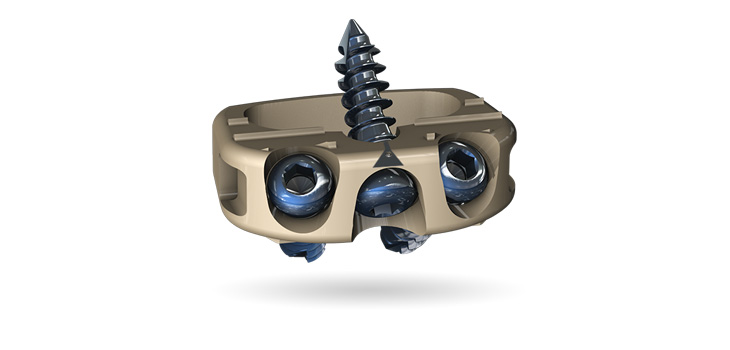
The first two surgeries using Centinel Spine, Inc.’s Midline II-Ti fusion device have been performed in Texas and Florida.
First Two Surgeries Performed Using Centinel Spine’s Midline II-Ti
2 min read Premium comments
Secondary
On July 28, 2015, the company announced that Jessica Shellock, M.D., Texas Back Institute, Plano. Texas, and James Billys, M.D., Florida Orthopaedic Institute, North Tampa, Florida, performed the surgeries.
Shellock said she was impressed with the, “simplicity of implantation, the immediate stability of the device and the visibility of the titanium coating on the postoperative imaging.” Billys said he has used Stalif ALIF implants for many years with, “excellent clinical outcomes as well as high fusion rates.” He said the Midline II has the same “easy placement as the PEEK cage with the added advantages of the titanium coating.”
Titanium Coating
The device is designed with Ti-Active, a multidimensional, texturized titanium coating engineered with over 15 years of science and experience to provide “primary stability with an optimized topography enabling cellular attachment and proliferation as observed in a preclinical analysis.” The device is a no-profile anterior lumbar system used to treat degenerative pathologies in the lumbar spine.
Features
Features of the device noted by the company on its website include:
- Easier access to screw holes due to a medial screw placement which results in a 17% reduction of the overall surgical envelope as compared to Stalif Midline—ultimately providing for decreased tissue retraction.
- Greater graft area due to an open center to promote fusion throughout, the graft containment area represents a 70% increase over Stalif Midline.
- Maximized opportunities for fusion due to an increased anterior/posterior depth to achieve greater indirect decompression while concurrently sitting on the apophyseal ring. In addition, the company says it provides surgeons with the largest number of implant size offerings in the industry—ensuring patients are receiving the best anatomical fit possible.
The company introduced the fusion device at last year’s North American Spine Society meeting, claiming the Midline II is the “only Stand-Alone, No-Profile, Lumbar Integrated Interbody fusion device, with compressive fixation, that has been proven to be biomechanically equivalent to a 360° fusion.” The no-profile” design allows it to nest fully within the confines of the vertebral body, leaving the anatomy unchanged external to the interbody.
Centinel Spine President and CEO John Viscogliosi said the addition of the device to the company’s product portfolio, “is another step towards fulfilling Centinel Spine’s corporate mission of becoming the leader in anterior column support.”
Author
React:
Discussion
This is a fascinating development. In my practice we've seen similar outcomes with the revised protocol. The key differentiator seems to be patient selection criteria. Has anyone else noticed the correlation with BMI thresholds?
Great point. I'd push back slightly on the conclusion, the sample size in the cited study is too small to draw population-level inferences. That said, the directional signal is compelling and worth a larger RCT.
We implemented a similar approach last year. Early results are promising but we're still gathering 12-month follow-up data. Happy to share our protocol if anyone is interested.
Join the conversation
Orthopedic professionals are discussing this. Sign in and upgrade to read every comment and add your voice.