
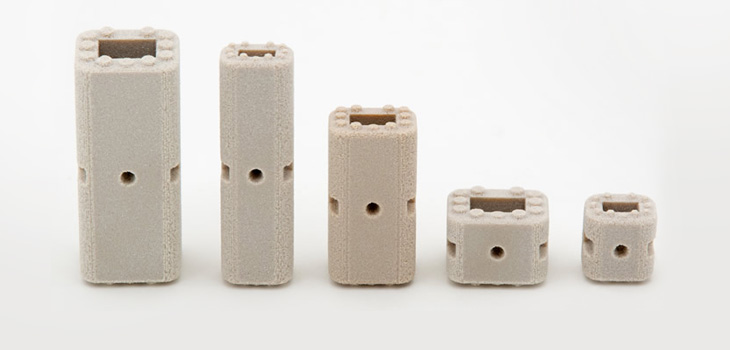
The Food and Drug Administration has granted 510(k) clearance to Oxford Performance Materials, Inc.’s SpineFab VBR Implant system. According to the company’s press release, OPM’s SpineFab system is the first and only FDA cleared 3D printed load-bearing polymer device for long-term implantation. The ruling represents OPM’s third successful Estefan regulatory clearance.
FDA Clears 3D Printed Spinal Implant
1 min read Premium comments
Secondary
OPM’s SpineFab device is a vertebral body replacement intended for use in the thoracolumbar regions of the spine to replace a collapsed, damaged, or unstable vertebral body due to tumor or trauma. The release states that OPM’s SpineFab VBR System implants will be 3D printed in 48 sizes using only biocompatible polymer and laser light.
The company will manufacture the implants utilizing the company’s OsteoFab process, which combines OPM’s 3D printing technology with the company’s proprietary OXPEKK powder formulation to print orthopedic and neurological implants. The result is what the company refers to as a “beneficial set of attributes, including radiolucency, bone-like mechanical properties, and bone ongrowth characteristics.”
“Receiving FDA clearance for our SpineFab system is a significant accomplishment for our team and a key milestone for OPM, ” said Scott DeFelice, OPM chief executive officer and chairman. “This clearance serves as further confirmation of our ability to repeatedly build fully functional 3D-printed parts.”
Severine Zygmont, president of OPM Biomedical, said “Today we have achieved our goal to build the first 3D printed polymer implant that has been cleared for a load bearing indication. Our OsteoFab process, which combines 3D printing with a unique material chemistry, is causing the industry to rethink how implants are designed and manufactured. We can now envision devices that will promote bone tissue formation while being imaging friendly and anatomically desirable.”
OPM’s OsteoFab Patient-Specific Cranial and Facial devices are presently distributed exclusively by Zimmer Biomet.
Author
React:
Discussion
This is a fascinating development. In my practice we've seen similar outcomes with the revised protocol. The key differentiator seems to be patient selection criteria. Has anyone else noticed the correlation with BMI thresholds?
Great point. I'd push back slightly on the conclusion, the sample size in the cited study is too small to draw population-level inferences. That said, the directional signal is compelling and worth a larger RCT.
We implemented a similar approach last year. Early results are promising but we're still gathering 12-month follow-up data. Happy to share our protocol if anyone is interested.
Join the conversation
Orthopedic professionals are discussing this. Sign in and upgrade to read every comment and add your voice.