
Thanks to the vision of clinician-researchers at NYU Langone Medical Center, scoliosis patients who undergo surgery can now emerge from the OR with less chance of an infection. The NYU team has developed a new wound closure technique whereby the surgeon can close several layers of muscle and fascia while maintaining blood supply from the donor site to the recipient site. The new closure method has been on the rise at NYU Langone since 2009, and is a collaborative effort between the Departments of Orthopaedic Surgery and Plastic Surgery.
0% Complication Rate! NYU Pioneers Closure Technique
2 min read Premium comments
Secondary
“This game-changing method for closing incisions after surgery can benefit all patients with scoliosis, especially those most at risk for complications depending on the cause of their spine problems, ” says corresponding study author David S. Feldman, M.D., professor of orthopedic surgery and pediatrics at NYU Langone, in the August 20, 2015 news release. “All of our patients with scoliosis—from the basic to most complex cases—can feel confident knowing their safety is our top priority.”
This retrospective study, published online this past July in the Journal of Pediatric Orthopaedics, involves a multilayered flap that, according to the news release, “reduces complication rates by eliminating ‘dead space, ’ or pockets around spinal hardware and fusion sites where infection can start. The technique also creates a better barrier to separate surgical hardware and bone grafts from the skin’s surface.”
Included in the study were 76 patients aged 8 to 25 years, with non-idiopathic scoliosis who had undergone a posterior spinal fusion surgery; 42 patients had their incisions closed using conventional techniques, while 34 underwent the new flap technique. While roughly 19% of patients who experienced the conventional closure methods had a wound complication, those who underwent the new, multilayered muscle flap closure method experienced a 0% complication rate.
“The success of this procedure speaks to our Medical Center’s commitment to collaborate with other medical specialties to ensure our patients receive optimal patient care, ” said senior study author Michael S. Margiotta, M.D., assistant professor of plastic surgery and neurosurgery at NYU Langone.
According to the news release, patients with non-idiopathic scoliosis (curve caused by underlying disease) are 25-76% more likely to experience complications following spinal fusion and 4-23% more likely to have an infection, compared to those with idiopathic scoliosis.
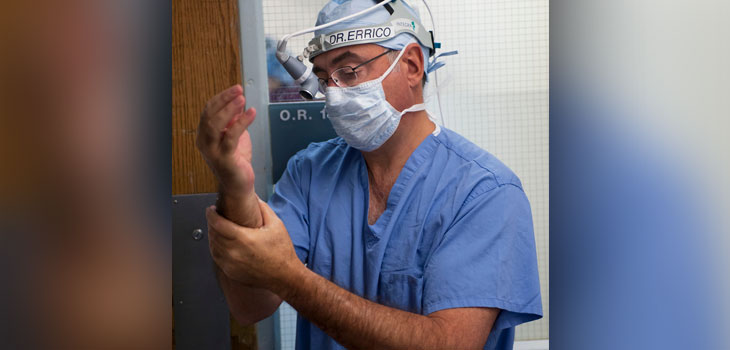
Asked about the collaboration between plastic surgery and orthopedic surgery, Dr. Margiotta and Thomas Errico, M.D., chief of the Division of Spine Surgery at NYU Langone, told OTW, “Plastic surgeons and spine surgeons have a long history of cooperation and collaboration at NYU Langone Medical Center, dating back over 40 years. It began with re-operations on radiated spinal cord tumors that required revisions. The handling of previously radiated tissue is a complex wound healing problem. As instrumentation became more complex and wound healing problems ensued, it was a natural for spine surgeons at NYU to turn to our Plastics colleagues.”
“Limb salvage was another area of intense cooperation with early efforts at reimplantation of limbs from accidental amputations. Bony stability had to be accomplished to protect the vascular and soft tissue work that was being done. As surgery becomes more complex, cooperation is a natural consequence.”
React:
Discussion
This is a fascinating development. In my practice we've seen similar outcomes with the revised protocol. The key differentiator seems to be patient selection criteria. Has anyone else noticed the correlation with BMI thresholds?
Great point. I'd push back slightly on the conclusion, the sample size in the cited study is too small to draw population-level inferences. That said, the directional signal is compelling and worth a larger RCT.
We implemented a similar approach last year. Early results are promising but we're still gathering 12-month follow-up data. Happy to share our protocol if anyone is interested.
Join the conversation
Orthopedic professionals are discussing this. Sign in and upgrade to read every comment and add your voice.