
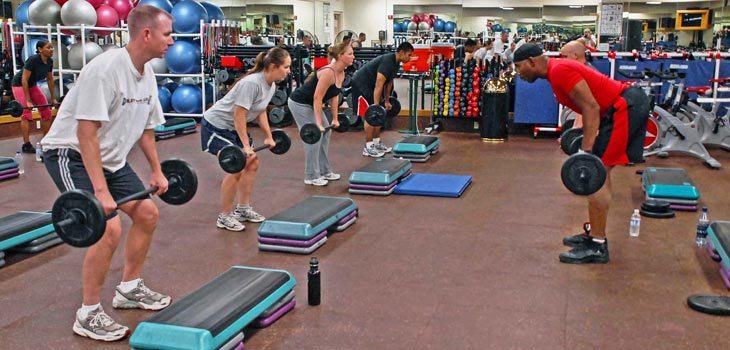
Get hoppin’ guys…new research from the University of Missouri (MU) is showing that certain types of weight-lifting and jumping exercises can improve bone density in active, healthy, middle-aged men with low bone mass. These exercises, which need to be done for at least six months, may help prevent osteoporosis by facilitating bone growth.
Weight Lifting, Jumping Prevent Osteoporosis?
2 min read Premium comments
Secondary
“Weight-lifting programs exist to increase muscular strength, but less research has examined what happens to bones during these types of exercises, ” said Pam Hinton, Ph.D., an associate professor and the director of nutritional sciences graduate studies in the MU Department of Nutrition and Exercise Physiology, in the July 14, 2015 news release. “Our study is the first to show that exercise-based interventions work to increase bone density in middle-aged men with low bone mass who are otherwise healthy. These exercises could be prescribed to reverse bone loss associated with aging.”
As indicated in the news release, Dr. Hinton and MU colleagues Peggy Nigh and John Thyfault “studied 38 physically active, middle-aged men who completed either a weight-lifting program or a jumping program for a year. The researchers found the bone mass of the whole body and lumbar spine significantly increased after six months of completing the weight-lifting or jumping programs, and this increase was maintained at 12 months. Hip-bone density only increased among those who completed the weight-lifting program.”
Asked what led to this work, Dr. Hinton commented to OTW, “We previously reported that among physically active, healthy men the prevalence of osteopenia was surprisingly high. Many of the participants in this study wanted to know what they could do to increase their bone mass. Unfortunately, the current recommendation to perform ‘weight-bearing exercise’ to maintain bone health in adulthood is very vague, and although weight-lifting and activities that involve jump are suggested, there is no specific information on the exercise mode, frequency, or duration needed.”
“Furthermore, the existing literature examining the efficacy of exercise interventions is devoid of studies in men with low bone mass. Therefore, the motivation for this study was to develop an evidence-based exercise prescription to increase bone mass in men who already have low bone mass. As a result of our study, we can now provide men a defined weight-lifting or jump training exercise plan that has been proven to increase bone mass. In addition to being safe and effective, the resistance training and jump training programs require minimal equipment and time, making them feasible.”
“It was surprising to learn that both resistance training (weight-lifting) and jump-training were equally effective at increasing bone mineral density of the whole body and lumbar spine.”
“Long-term, regular weight-lifting or jump-training appear to be an effective alternative to osteoporosis medications. Although the relative change in BMD may not be as large as that observed with medications, exercise is not associated with the negative side effects observed for pharmacologic treatments.”
“In the future the exercise intervention should be expanded to other populations who might benefit, e.g. men who are not physically active, men with osteoporosis.”
Author
React:
Discussion
This is a fascinating development. In my practice we've seen similar outcomes with the revised protocol. The key differentiator seems to be patient selection criteria. Has anyone else noticed the correlation with BMI thresholds?
Great point. I'd push back slightly on the conclusion, the sample size in the cited study is too small to draw population-level inferences. That said, the directional signal is compelling and worth a larger RCT.
We implemented a similar approach last year. Early results are promising but we're still gathering 12-month follow-up data. Happy to share our protocol if anyone is interested.
Join the conversation
Orthopedic professionals are discussing this. Sign in and upgrade to read every comment and add your voice.