
A new study appearing in The Journal of Bone & Joint Surgery indicates that patients who received rehabilitation via video teleconference, or “telerehabilitation, ” following total knee replacement (TKR) had comparable outcomes to patients who received in-person physical therapy.
Study: Telerehabilitation After TKR Equivalent to Traditional PT
2 min read Premium comments
Secondary
“This study is the first to provide strong evidence for use of telerehabilitation as an alternative to conventional face-to-face care following total knee replacement surgery, ” said Hélène Moffet, Ph.D., lead study author, physical therapist and professor at Université Laval in Quebec, in the July 15, 2015 news release.
A total of 205 patients scheduled for hospital discharge following TKR were divided into two groups: one that received home visits and one that received in-home telerehabilitation. “Both patient groups received the same instructions and number of interactions with a physical therapist over a two-month period. Patients were evaluated prior to TKR, immediately after the two-month rehabilitation program, and again at four months post-hospital discharge. Standard validated outcome measures were used to assess pain, stiffness, overall function, range of motion, strength, ability to participate in sports and daily activities, and overall life quality.”
According to the news release, “Pain, function and stiffness scores were identical two months following hospital discharge in both the standard and telerehabilitation groups. At four months after discharge from the hospital, these outcomes remained comparable between the two groups. Range of motion, strength, activity and quality of life outcomes also were similar between the groups at two and four months after hospital discharge.”
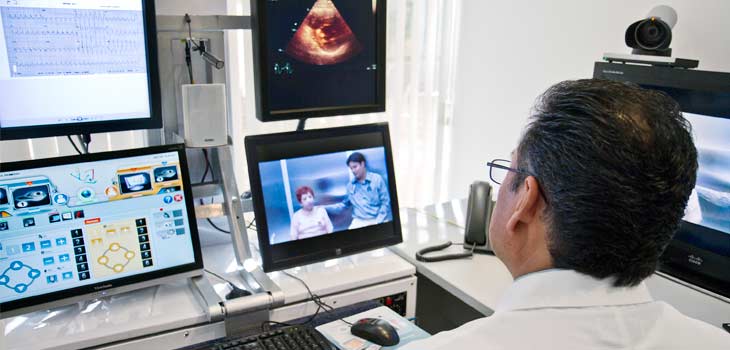
Asked for details on telerehab, Dr. Moffet told OTW, “The technology used to deliver telerehabilitation at home was a videoconferencing system (Tandberg 550 MXP). Communication between the two sites (home and rehabilitation centre) was ensured by a high speed internet connection. Telerehabilitation sessions were scheduled in advance by the physiotherapist. The physiotherapist initiated the session (from the rehabilitation centre) at the time scheduled with the patient, and the patient had only to push a button to accept the communication and start the session. Clinicians (physiotherapists) controlled cameras and audio signal intensity at both sites. The duration of the each session was about 45 to 50 minutes. During the session, the physical condition of the patient was briefly assessed to detect any complications, then exercises were performed and advice was given. The exercises prescribed were adapted to the specific condition and needs of each patient and were progressed during the two months-intervention.”
As for what issues need to be resolved before this can be used in a more widespread manner, Dr. Moffet commented to OTW, “Different issues must be resolved to implement telerehabilitation in regular care. First, special program in telehealth/telerehabilitation must be put in place to support the health professionals with the technology and train them with this new mode of service delivery. Support should also be given to the patients (information, training, technical support with the technology and new communication modes, installation of at home equipment, etc.). Of course there are also some financial, ethical and regulatory considerations.”
Author
React:
Discussion
This is a fascinating development. In my practice we've seen similar outcomes with the revised protocol. The key differentiator seems to be patient selection criteria. Has anyone else noticed the correlation with BMI thresholds?
Great point. I'd push back slightly on the conclusion, the sample size in the cited study is too small to draw population-level inferences. That said, the directional signal is compelling and worth a larger RCT.
We implemented a similar approach last year. Early results are promising but we're still gathering 12-month follow-up data. Happy to share our protocol if anyone is interested.
Join the conversation
Orthopedic professionals are discussing this. Sign in and upgrade to read every comment and add your voice.