
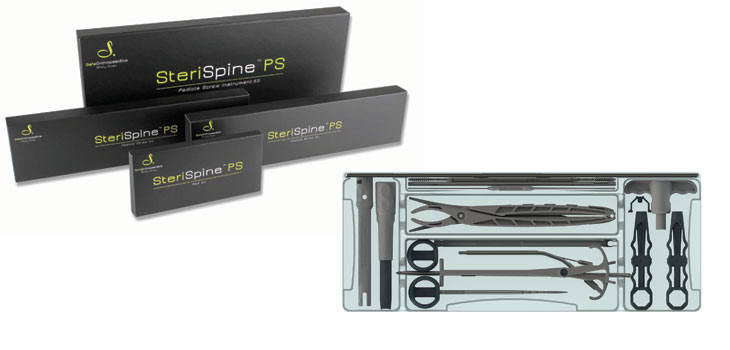
Safe Orthopaedics has announced the positive outcomes of a retrospective clinical study carried out on its SteriSpine system. The study was performed by Gregory Lanford, M.D., a neurosurgeon at St. Thomas Hospital for Specialty Surgery in Nashville, Tennessee.
Safe Orthopaedics: Good News for SteriSpine
1 min read Premium comments
Secondary
In the July 22, 2015 news release, Dr. Lanford said, “Safe Orthopaedics’ SteriSpine is a cost-effective system that negates the need for sterilization and potentially lowers the infection rate by mitigating risks for cross-contamination. The instruments are easy to use by any surgeon experienced in pedicle screw fixation.”
Dr. Lanford performed surgery with SteriSpine kits on 45 patients, using an instrumented lumbar fusion via an open or percutaneous approach. All surgeries occurred between July 2013 and January 2015. Each patient was followed for 3 to 12 months. No cases of infection nor morbidity or mortality were reported.
Safe Orthopaedics U.S. Vice President Tim Nye added, “This study is an important milestone as it highlights the potential benefits of using Safe Orthopaedics products. We are very thankful to Dr. Lanford for this important work.”
Gregory Lanford M.D. told OTW, “Though the instruments are disposable, SteriSpine equipment provides the spine surgeon a clinically equivalent product to traditional offerings. The tools are of extremely high quality and have the same tactile sensation as metal.”
Asked about the company’s plans, Nye commented to OTW, “We would like to increase the visibility of Safe Orthopaedics and SteriSpine throughout the instrumented spine market and promote the tremendous advantages of the single use, sterile instrument model.”
React:
Discussion
This is a fascinating development. In my practice we've seen similar outcomes with the revised protocol. The key differentiator seems to be patient selection criteria. Has anyone else noticed the correlation with BMI thresholds?
Great point. I'd push back slightly on the conclusion, the sample size in the cited study is too small to draw population-level inferences. That said, the directional signal is compelling and worth a larger RCT.
We implemented a similar approach last year. Early results are promising but we're still gathering 12-month follow-up data. Happy to share our protocol if anyone is interested.
Join the conversation
Orthopedic professionals are discussing this. Sign in and upgrade to read every comment and add your voice.