
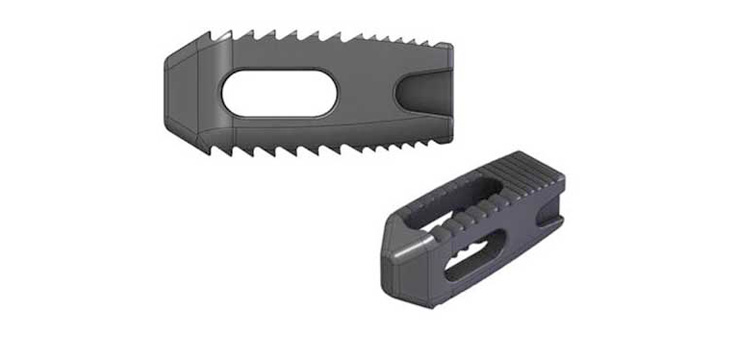
Could FDA clearance be in the works later this year for Amedica Corporation’s composite silicon nitride spinal interbody device?
Outlook Improves for Amedica’s Novel Spinal Implant
1 min read Premium comments
Secondary
Amedica’s Chairman and CEO Sonny Bal, M.D., J.D., MBA said: “After successfully completing an important surveillance audit with no non-conformities being identified, we’ve submitted responses to the FDA questions regarding our composite silicon nitride device.” “Our submission starts the clock once again with the FDA, and we remain hopeful for a final response during the third quarter of this year. As sales momentum of this unique device continues to build in Europe, we look forward to beginning domestic shipments as soon as we achieve clearance.”
Silicon nitride, the material from which both Amedica’s spinal implants and large joints are made, is purported to be the toughest, most fracture resistant, chemically stable bioceramic currently on the market. Silicon nitride’s surface texture and hydrophilic nature attract both osteoblasts and physiologic proteins to ensure reliable osteointegration, while its surface biochemistry inhibits bacterial biofilm adhesion.
The material is manufactured through a partnership with Kyocera, one of the world’s largest ceramic manufacturers. Amedica’s spine products are FDA-cleared, CE-marked, and are currently marketed in the U.S. and select markets in Europe and South America through its distributor network and its growing OEM partnerships.
Author
React:
Discussion
This is a fascinating development. In my practice we've seen similar outcomes with the revised protocol. The key differentiator seems to be patient selection criteria. Has anyone else noticed the correlation with BMI thresholds?
Great point. I'd push back slightly on the conclusion, the sample size in the cited study is too small to draw population-level inferences. That said, the directional signal is compelling and worth a larger RCT.
We implemented a similar approach last year. Early results are promising but we're still gathering 12-month follow-up data. Happy to share our protocol if anyone is interested.
Join the conversation
Orthopedic professionals are discussing this. Sign in and upgrade to read every comment and add your voice.