
Mindray Medical International Limited, based in Shenzhen, China, has swallowed up the remaining stake in Wuhan Dragonbio for $70.2 million.
Mindray Expands Ortho Footprint in China
2 min read Premium comments
Secondary
Mindray, China’s largest medical equipment manufacturer acquired a majority stake in Dragonbio, a manufacturer of orthopedic products for trauma, spine and joints procedures, in 2012 for $35.5 million.
Since acquiring its majority stake, Mindray co-CEO Minghe Cheng reportedly said on July 7, 2015 that the integration has been well on track. “We are optimistic about the prospects of the orthopedic consumable market in China and have therefore decided to make Dragonbio our wholly owned subsidiary. The transaction is expected to help us manage and expand the business more efficiently and effectively through our strong capital position, large-scale operational experience and worldwide presence.”
Access to “Promising and Sizable Market”
“The orthopedic consumable market has high barriers to entry, but this deal will give us instant access to this promising and sizable market, ” Cheng said in prepared remarks. “We expect to unlock the value of the acquired business through our strong capital position, large-scale operational experience and worldwide presence.”
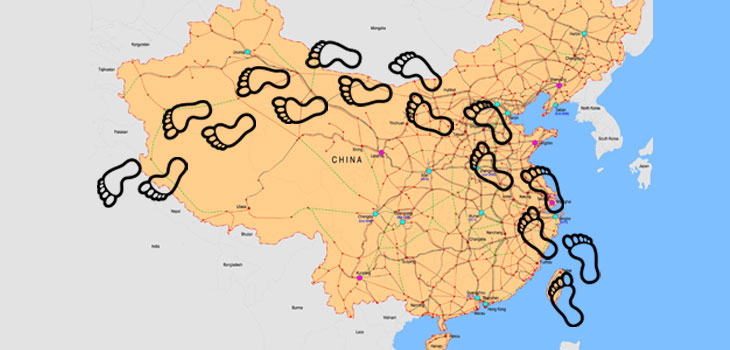
Dragonbio was founded in Wuhon, China, in 2005. Its orthopedics division sells products exclusively in China. Its 2011 revenues totaled nearly $7.7 million.
Mindray, founded in 1991, manufactures and markets patient monitoring and life support devices, in vitro diagnostics and medical imaging systems.
In addition to its facilities in and around Shenzhen, Mindray maintains 29 local sales and service offices throughout China and around the world, with North American headquarters located in Mahwah, New Jersey. The company has sales and service subsidiaries in Amsterdam, Istanbul, London, Mexico City, Moscow, Mumbai, Sao Paulo, Seattle, Toronto and Vancouver.
When Mindray bought Dragonbio’s orthopedics assets in 2012, a company press release said Frost & Sullivan estimated the orthopedic market size in China to be approximately US$1.1 billion in 2010 and rapidly growing with a projected CAGR of over 18% from 2010 to 2015.
U.S. Orthopedic Presence in China
U.S. orthopedic device companies have been busy acquiring or merging with Chinese medical device companies.
In December 2010, Zimmer Holdings, Inc. acquired Beijing Montagne Medical Device Co., one of the largest orthopedic implant manufacturers in China.
Medtronic, Inc. acquired China Kanghui in 2012, which was the most competitive orthopedic device maker in China. In September 2011, MicroPort entered into the market by purchasing Suzhou Best and acquired Wright Medical Technology, Inc.’s OrthoRecon business for $290 million in January 2014
Stryker Corp. also got into the game by acquiring Trauson, China’s largest trauma products maker, in January 2013.
Mindray Management Acquisition Offer
Mindray management has offered to pay $3.5 billion to take the New York Stock Exchange publicly traded company private. The company said it formed a committee of three independent directors to consider the offer.
Author
React:
Discussion
This is a fascinating development. In my practice we've seen similar outcomes with the revised protocol. The key differentiator seems to be patient selection criteria. Has anyone else noticed the correlation with BMI thresholds?
Great point. I'd push back slightly on the conclusion, the sample size in the cited study is too small to draw population-level inferences. That said, the directional signal is compelling and worth a larger RCT.
We implemented a similar approach last year. Early results are promising but we're still gathering 12-month follow-up data. Happy to share our protocol if anyone is interested.
Join the conversation
Orthopedic professionals are discussing this. Sign in and upgrade to read every comment and add your voice.