
Jennifer Seifert, Ph.D., an award-winning bioengineer, is inaugurating a new role at TissueGen…Dr. Seifert has just been named the company’s first Senior Scientist. Dr. Seifert, who was most recently at the University of Texas (UT) at Dallas, will be responsible for TissueGen’s application of ELUTE fiber technology for the treatment of spinal cord and other injuries.
Jennifer Seifert, Ph.D. New Senior Scientist at TissueGen
1 min read Premium comments
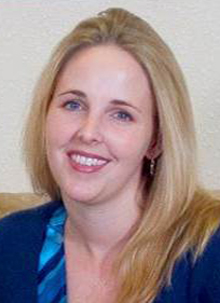
At UT, Dr. Seifert held the post of research assistant professor in the Department of Bioengineering. An expert in molecular biology and neuroscience, Dr. Seifert has devoted her research primarily to the development of repair strategies for the central and peripheral nervous systems applying cellular and molecular mechanisms of axonal growth.
Asked about the most exciting areas of research in the area of spinal cord injuries, Dr. Seifert told OTW, “This is an exciting time in the area of spinal cord injury repair, with recent technology breakthroughs poised to potentially allow unprecedented progress in treatment approaches. New developments in drug delivery will allow for more controlled and tunable localized treatment options that were not possible before. Additionally, advancements in the understanding of combinatorial effects of varied treatments (such as growth factors, physical rehabilitation, electrical stimulation) on regeneration/reinnervation and plasticity are making great strides towards functional improvement for patients living with SCI.”
“I am looking forward to learning more about the many capabilities of TissueGen’s ELUTE fibers and to fully understanding the production process. A large focus of my career to date has been to apply knowledge of cellular neuroscience and signal transduction to models of spinal cord injury repair. TissueGen’s proprietary technology—which enables a wider variety of drugs and therapeutic agents than ever before possible to be delivered directly to surgical sites—opens up the opportunity for new approaches to advanced treatments in nerve repair which I look forward to exploring.”
Author
React:
Discussion
This is a fascinating development. In my practice we've seen similar outcomes with the revised protocol. The key differentiator seems to be patient selection criteria. Has anyone else noticed the correlation with BMI thresholds?
Great point. I'd push back slightly on the conclusion, the sample size in the cited study is too small to draw population-level inferences. That said, the directional signal is compelling and worth a larger RCT.
We implemented a similar approach last year. Early results are promising but we're still gathering 12-month follow-up data. Happy to share our protocol if anyone is interested.
Join the conversation
Orthopedic professionals are discussing this. Sign in and upgrade to read every comment and add your voice.