
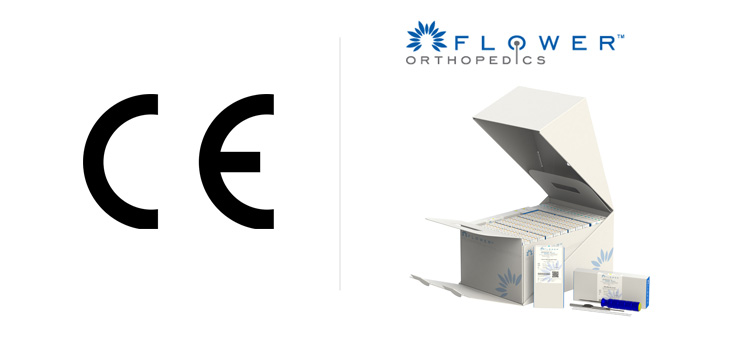
The single-use bone fixation wizards at Flower Orthopedics are celebrating the acquisition of its CE mark approval. Makers of the FlowerCube, Flower Orthopedics is pleased that the European Union approval covers its entire product line—more than 400 implants.
Flower Orthopedics Receives CE Mark
1 min read Premium comments
Secondary
“Receiving CE marking approval is a significant milestone for Flower Orthopedics. The market response to the FlowerCube concept, to our anatomic implants and to the single-use instruments in the United States has been extremely positive, and we are excited to bring this concept to the European market, ” said company President and CEO Oliver Burckhardt in the July 2, 2015 news release. “We are committed to providing our customers in the United States and Europe cost-effective, safe and efficient Ready-for-Surgery treatment solutions that bring true quantifiable value into to the OR.”
The FlowerCube is ready to go once it hits the OR. The implants and instruments are sterile packaged and are single-use. According to the company, “The FlowerCube is delivered ready for use, eliminating set drop off and preoperative on-site sterilization.”
Burckhardt told OTW, “The CE marking approval is an important milestone for Flower Orthopedics, given the growing interest in Europe for our Ready-for-Surgery FlowerCube concept. Mirroring our U.S. experience, medical facilities overseas are looking for standardized bone fixation solutions that are immediately accessible with single-use, sterile implants and instruments that do not require costly and time consuming pre/post surgery processing. While we have been approached by a number of large EU [European Union] distributors over the years, we will take a very deliberate approach to finding the right distribution partners. We are confident that we can build a robust distribution network with strategic-minded partners who embrace our core belief of changing orthopedic bone fixation standards beginning in 2016.”
Author
React:
Discussion
This is a fascinating development. In my practice we've seen similar outcomes with the revised protocol. The key differentiator seems to be patient selection criteria. Has anyone else noticed the correlation with BMI thresholds?
Great point. I'd push back slightly on the conclusion, the sample size in the cited study is too small to draw population-level inferences. That said, the directional signal is compelling and worth a larger RCT.
We implemented a similar approach last year. Early results are promising but we're still gathering 12-month follow-up data. Happy to share our protocol if anyone is interested.
Join the conversation
Orthopedic professionals are discussing this. Sign in and upgrade to read every comment and add your voice.