
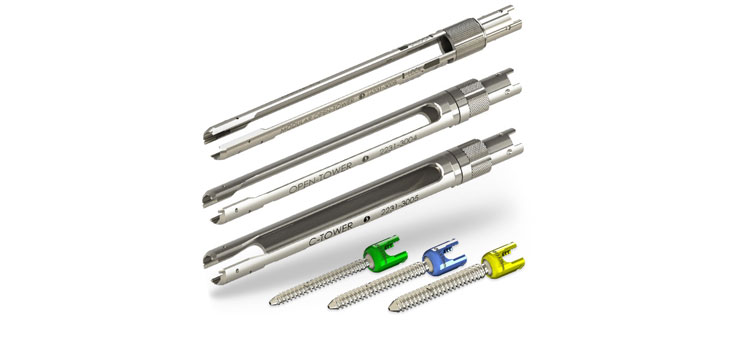
Captiva Spine, Inc. which modestly describes itself in its press release as “creating and maintaining sincere, honest, collaborative relationships to deliver smart, elegant, and intuitive spinal solutions” has received 510 (k) clearance, from the FDA to market its enhanced TowerLOX MIS Pedicle Screw System.
FDA Clears Captiva Spine’s MIS Pedicle Screw System Enhancements
1 min read Premium comments
Secondary
The enhancements include what the firm calls its PivoQuik Rod-Inserter and Tower Guide to allow for rapid rod alignment and the Modular Open Tower locking mechanisms that allow for rod insertion and visualization through the central shaft of the tower.
Company President and Founder Dale Mitchell said, “We’ve obsessively invested time collaborating with leading MIS spine surgeons, discovered new resources through our vendor partners, and delivered coordinated enthusiasm through all aspects of this project.”
Minimally invasive instruments for lumbar spine surgery has become the most innovative sector in spine surgery. Over the past four years, more MIS innovations have been submitted for the annual Orthopedics This Week Spine Technology Awards than any other category – including biologics and motion preservation implants.
Captiva Spine is a privately owned medical device organization founded in Jupiter, Florida, in 2007. For more information go to: www.captivaspine.com.
Author
React:
Discussion
This is a fascinating development. In my practice we've seen similar outcomes with the revised protocol. The key differentiator seems to be patient selection criteria. Has anyone else noticed the correlation with BMI thresholds?
Great point. I'd push back slightly on the conclusion, the sample size in the cited study is too small to draw population-level inferences. That said, the directional signal is compelling and worth a larger RCT.
We implemented a similar approach last year. Early results are promising but we're still gathering 12-month follow-up data. Happy to share our protocol if anyone is interested.
Join the conversation
Orthopedic professionals are discussing this. Sign in and upgrade to read every comment and add your voice.