
Surprise government inspections are coming in China’s medical device sector.
China Starts Surprise Device Maker Inspections
1 min read Premium comments
Secondary
Beginning in September, inspectors from the China Food and Drug Administration (CFDA) are going to start making unannounced visits to medical device manufacturers with products registered to be sold in China.
According to Stewart Eisenhart of the Emergo Group, the surprise inspections are authorized by a 2012 “Working Procedures for Unannounced Inspection of Medical Device Manufacturers” regulation established by the CFDA’s predecessor, the Sate Food and Drug Administration.
Inspection Measures
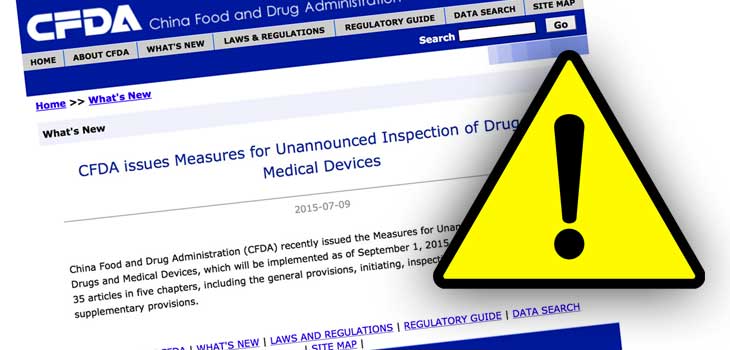
The CFDA issued the “Measures” for the unannounced inspections in July 7, 2015. According to the CFDA, the Measures comprise, “35 articles in five chapters, including the general provisions, initiating, inspection, handling and supplementary provisions.”
According to the CFDA order, the inspections will be warranted in cases such as:
- Complaints of a device’s quality or safety occur
- Improper or inadequate adverse event reporting
- Serious violations of quality system compliance
- Other quality or safety risks involving a device are suspected
If the investigators find potential problems, the CFDA may take disciplinary actions such as warning letters, additional investigations, product recalls or revocation of quality system certification.
Penalties
In addition, Eisenhart previously cited the law firm CMS Cameron McKenna, which said if officials find any violations during such inspections, they may turn inspections over to local CFDA investigators, “which in turn could result in possible sanctions. However, a manufacturer may appeal, explain or immediately correct a found violation in order to reduce the likelihood of further investigation and penalties.”
The new regulations from the previous regulatory body also suggested that lighter penalties may be handed out, “if the violator makes the initial effort to correct improper actions and mitigate public health risks caused by its product, or in cases where the violator has been coerced by another entity to commit an offense, ” wrote Eisenhart.
A similar inspection regimen already exists for pharmaceuticals.
Author
React:
Discussion
This is a fascinating development. In my practice we've seen similar outcomes with the revised protocol. The key differentiator seems to be patient selection criteria. Has anyone else noticed the correlation with BMI thresholds?
Great point. I'd push back slightly on the conclusion, the sample size in the cited study is too small to draw population-level inferences. That said, the directional signal is compelling and worth a larger RCT.
We implemented a similar approach last year. Early results are promising but we're still gathering 12-month follow-up data. Happy to share our protocol if anyone is interested.
Join the conversation
Orthopedic professionals are discussing this. Sign in and upgrade to read every comment and add your voice.