
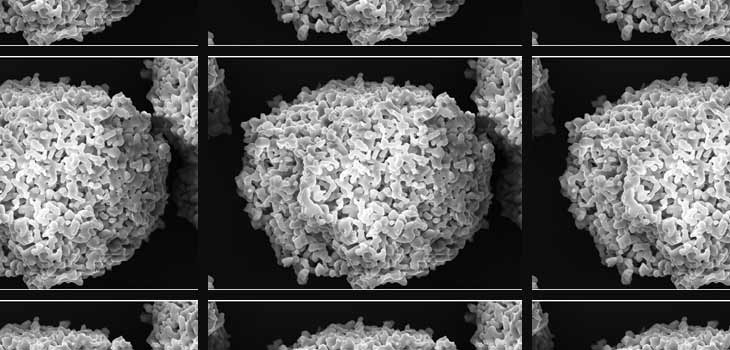
BioStructures, LLC is pleased to report on its latest corporate landmark event…the company is announcing that it has reached a milestone of 4, 000 implantations of Signafuse Bioactive Bone Graft Putty. In 2014 Signafuse was FDA 510(k) cleared as a bone void filler indicated for standalone use in posterolateral spine fusion procedures. According to the July 30, 2015 news release, Signafuse is “a moldable bone graft comprising a proprietary combination of patented bioactive glass particles and biphasic mineral granules suspended in a patented resorbable polymer carrier.”
BioStructures: 4, 000 Signafuse Implantations
2 min read Premium comments
Secondary
Biostructures Chief Technology Officer John Brunelle, Ph.D., “Signafuse was intentionally designed to support the complex healing requirements of posterolateral spine fusion surgery, without the aid of autologous extenders or enhancers. Following a comprehensive evaluation of the best available bone graft technologies, published clinical data and surgeon feedback, paired with an intuitive understanding of the fusion healing environment, we conceived a composite bone graft that would thrive in the complex fusion healing environment.”
Dr. Brunelle added, “Through the synergistic combination of these scientifically and clinically validated biomaterials, in the most optimized forms available, Signafuse provides a bone graft that meets the intra-operative handling needs of the surgeon and effectively facilitates structural fusion development in the posterolateral spine.”
Russell Cook, CEO of BioStructures stated, “Hitting this milestone in such a short timeframe is a testament to the clinical benefits of the Signafuse technology and that taking the right approach in design will produce what we think is the best bone graft substitute on the market. Our highly focused, clinically driven commercialization strategy has minimized development time and allows us to provide a larger number of patients with the most advanced technology. BioStructures was founded in 2009 with the objective to develop and commercialize proprietary first-in-class products and Signafuse is proof that we are achieving our goals. Signafuse has become a significant addition to our Bioactive, Collagen, Synthetic, DBM [demineralized bone matrix] and Allograft suite of products.”
Asked for details about the commercialization strategy, Russell Cook told OTW, “BioStructures is highly focused on the development and commercialization of validated solutions for the spine surgeon. Through exemplary due diligence, we’ve identified proven patient benefiting technologies to maximize the performance of our product. Offering what we think is the best solution available is the key to our commercialization strategy.”
“With the clinical success and growth rates we are seeing, it is realistic to think Signafuse will become a market leading biologic for posterolateral spine fusion. In a year from now, I believe we will see evidence of just that.”
React:
Discussion
This is a fascinating development. In my practice we've seen similar outcomes with the revised protocol. The key differentiator seems to be patient selection criteria. Has anyone else noticed the correlation with BMI thresholds?
Great point. I'd push back slightly on the conclusion, the sample size in the cited study is too small to draw population-level inferences. That said, the directional signal is compelling and worth a larger RCT.
We implemented a similar approach last year. Early results are promising but we're still gathering 12-month follow-up data. Happy to share our protocol if anyone is interested.
Join the conversation
Orthopedic professionals are discussing this. Sign in and upgrade to read every comment and add your voice.