
Those at Connecticut-based Woven Orthopedic Technologies, LLC are feeling pretty festive these days…they have hit the $6.6 million mark in equity financing since the company’s inception in 2013. This is thanks to the recent sale of more than $4 million worth of capital.
$6.6 Million for Woven Orthopedic Technologies
2 min read Premium comments
Secondary
Brandon Bendes, vice president of strategy & finance at Woven Technologies, told OTW, “After we raised our seed round in mid-2013, we started identifying the funds needed to help us optimize design, conduct preliminary tests, and roll-out the strategic business initiatives necessary to develop the business. As investment professionals who have built and exited companies in the past, we understood the essential components needed to raise capital from investors: (1) a superb idea that solves an unmet need, (2) external validation from industry experts, and (3) a great leadership team with grit to execute the business plan.”
“In regards to the idea, Viscogliosi Brothers, a VC [venture capital] firm that specializes in the neuro-musculoskeletal industry and is known for identifying and developing successful medical devices, co-founded the business. We also raised seed funds from some outside investors and were confident that the technology filled an unmet need.”
“The next step was to obtain support in what we were doing from external industry experts. Our goal was to attract the people who knew the most about the clinical need. We approached surgeons who use the products, distributors who sell devices in our industry, and medical device executives who manage the large corporations that manufacture and supply products in our space. Through this process, we received investments from two of the top medical screw distributors in the world; a handful of world-renown surgeons in trauma, spine, and sports medicine; the former chairman and CEO of one of the world’s largest medical device companies; and a former board member for the world’s largest trauma business, among others. Given that we are creating a device to be used in conjunction with screws for orthopedic surgery, we were fortunate to have a very strong initial investor base to support the raise.”
As for how the funds will be used, Bendes commented to OTW, “The funds are mainly being used for research and development. We are also dedicating funds for pre-clinical testing, quality systems, regulatory strategy and to expand our IP coverage to continue erecting barriers to entry for potential future competition. In addition, a small amount of funds are being utilized to build-out the systems necessary to reach the market (i.e., reimbursement, compliance, education) and we expect that this will increase as the business gets closer to commercialization.”
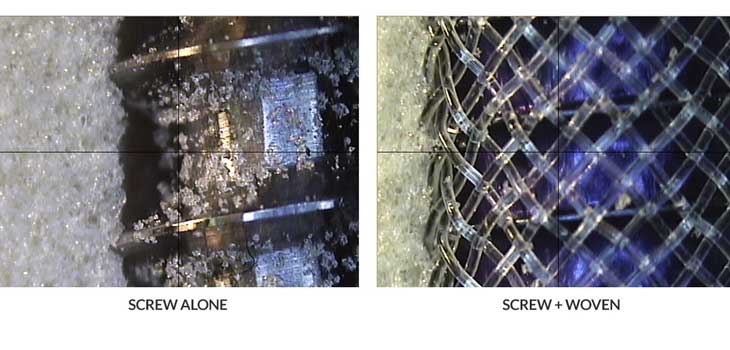
“We are developing a technology intended to offer a bone-friendly solution that enhances fixation to prevent loss of screw engagement and the additional treatments that typically follow (including reoperations). AO [Foundation], the leading global organization in trauma research identified fracture fixation in osteoporotic bone as a focal area of interest so developing a solution to provide better, faster, and cheaper fixation in various fracture scenarios plays a pivotal role in our business strategy.”
Author
React:
Discussion
This is a fascinating development. In my practice we've seen similar outcomes with the revised protocol. The key differentiator seems to be patient selection criteria. Has anyone else noticed the correlation with BMI thresholds?
Great point. I'd push back slightly on the conclusion, the sample size in the cited study is too small to draw population-level inferences. That said, the directional signal is compelling and worth a larger RCT.
We implemented a similar approach last year. Early results are promising but we're still gathering 12-month follow-up data. Happy to share our protocol if anyone is interested.
Join the conversation
Orthopedic professionals are discussing this. Sign in and upgrade to read every comment and add your voice.