
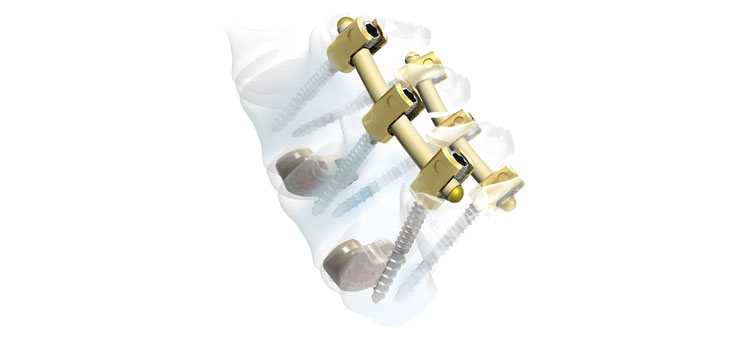
China-based Weigao Orthopaedic Device Co., Ltd. has chosen to work with Invibio Inc. on its spinal stabilization system known as Tulip. The device uses semi-rigid rods made from PEEK-OPTIMA, and is meant for one to three spine level surgeries. Surgeons may choose from either a 6.35mm-diameter round rod or a 6.35×7.2mm-diameter oval rod.
Weigao Orthopaedic Device to Utilize Invibio’s PEEK-OPTIMA
2 min read Premium comments
Secondary
“Throughout the product development and clinical adoption of our PEEK-OPTIMA semi-rigid rods Invibio was a great help to our company. This includes technical support and testing during the R&D phase, ” stated Kui Yang, Vice General Manager of Sales at Weigao Orthopaedic Device, in the May 28, 2015 news release. “Invibio invited, for example, overseas clinical experts to China to exchange experience in PEEK-OPTIMA based semi-rigid rod techniques. In addition, multi-center program discussions assisted in launching the product and promoting its clinical adoption. We appreciate the value of our relationship with Invibio, and we hope to continue our collaboration.”
The news release indicates: “Being non-metallic, PEEK-OPTIMA does not produce metal ions when implanted and offers, in addition, high strength combined with a modulus very similar to that of human bone. The proven implantable material, with a 15-year history of successful clinical application, has been widely used in the therapeutic treatment of the spine, orthopaedics, arthroscopy and trauma, with PEEK-OPTIMA used in over 5 million implanted devices worldwide.
Asked what this means for Invibio’s international expansion, John Devine, Ph.D., Strategic Business Unit Director, Medical commented to OTW, “It is extremely important to Invibio that we drive and deliver innovation globally. We are already a global player and emerging markets will be a key part of our future growth, both for Spine, our existing core business, and for our new platforms such as Dental, Trauma or Knee. The collaboration we have with Weigao is a fantastic example of our ability to work together at all stages of the medical device development in terms of development, testing and clinical introduction. It’s essential that we form great partnerships like these to meet the need for clinically impactful, cost effective solutions for the Chinese medical device market.”
When asked about their plans one year from now, Dr. Devine added, “We expect our material to deliver benefits in relation to improved load sharing and reduced stress at the bone screw interface for the Tulip device. We very much hope that this success evolves to deliver more innovations for Weigao in their key areas of spine and traumatology.”
React:
Discussion
This is a fascinating development. In my practice we've seen similar outcomes with the revised protocol. The key differentiator seems to be patient selection criteria. Has anyone else noticed the correlation with BMI thresholds?
Great point. I'd push back slightly on the conclusion, the sample size in the cited study is too small to draw population-level inferences. That said, the directional signal is compelling and worth a larger RCT.
We implemented a similar approach last year. Early results are promising but we're still gathering 12-month follow-up data. Happy to share our protocol if anyone is interested.
Join the conversation
Orthopedic professionals are discussing this. Sign in and upgrade to read every comment and add your voice.