
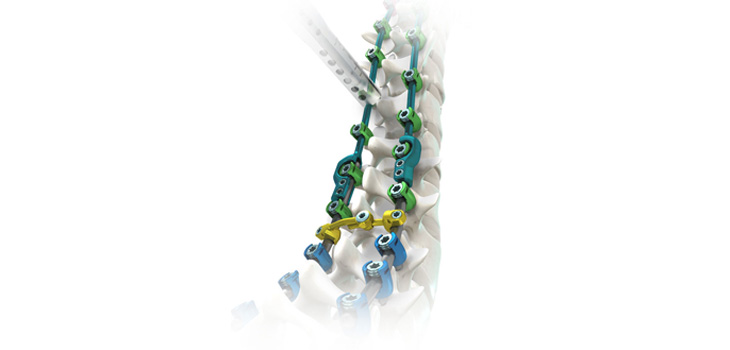
SpineCraft, LLC’s Astra Spine System has been cleared by the FDA for sale in the U.S.
SpineCraft’s Stabilization System Cleared by FDA
1 min read Premium comments
Secondary
According to a recent announcement by the company, the posterior spinal fixation system is intended to “provide immobilization and stabilization of spinal segments in skeletally mature patients as an adjunct to fusion in the treatment of the following acute and chronic instabilities or deformities of the thoracic, lumbar, and sacral spine:
- Severe spondylolisthesis (grades 3 and 4) of the L5-S1 vertebra
- Degenerative spondylolisthesis with objective evidence of neurologic impairment
- Fracture
- Dislocation
- Scoliosis
- Kyphosis
- Spinal tumor
- Failed previous fusion (pseudo-arthrosis).”
The implants are designed to allow intraoperative flexibility to choose rod diameter and material types.
Zimmer Distribution
SpineCraft has launched several spine systems, including the OsteoPore DBM products and Velox ACP System, and received clearance for the Apex Spine System in Australia and New Zealand. In July 2013, the company signed an agreement with Zimmer Holdings, Inc. for the Apex system for distribution in the U.S., Canada, Australia and New Zealand. The company has also reportedly opened a new expansion to its facility dedicated to workshop and training labs as well as warehouse space
SpineCraft is privately held and claims a “surgeon-centric” approach to developing new products. Wagby Asaad, M.D., is the company’s CEO and the advisory board includes: Kamal Ibrahim, M.D., Steven Mardjetko, M.D., Steven Mather, M.D., Anis Mekhail, M.D. and Youssry El-Hawary, M.D.
Author
React:
Discussion
This is a fascinating development. In my practice we've seen similar outcomes with the revised protocol. The key differentiator seems to be patient selection criteria. Has anyone else noticed the correlation with BMI thresholds?
Great point. I'd push back slightly on the conclusion, the sample size in the cited study is too small to draw population-level inferences. That said, the directional signal is compelling and worth a larger RCT.
We implemented a similar approach last year. Early results are promising but we're still gathering 12-month follow-up data. Happy to share our protocol if anyone is interested.
Join the conversation
Orthopedic professionals are discussing this. Sign in and upgrade to read every comment and add your voice.