
As of September 1, Munish C. Gupta, M.D. will be heading up spine at Washington University School of Medicine in St. Louis (WUSTL). Dr. Gupta has been appointed professor and chief of spine surgery in the Department of Orthopaedic Surgery at WUSTL. Dr. Gupta is currently a professor and vice chair of the Department of Orthopaedic Surgery, chief of orthopaedic spine surgery and co-director of the spine center at the University of California, Davis. He also is director of spine surgery at Shriners Hospitals for Children-Northern California. Dr. Gupta succeeds Lawrence G. Lenke, M.D., the Jerome J. Gilden, M.D., Distinguished Professor of Orthopaedic Surgery.
Munish C. Gupta, M.D. New Head of Spine at WUSTL
1 min read Premium comments
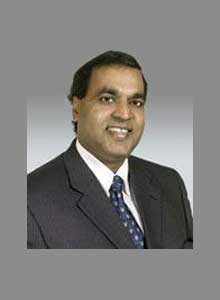
“Munish Gupta is a nationally and internationally known leader in spinal surgery and research, and we are excited he will be joining our faculty, ” said Regis J. O’Keefe, M.D., Ph.D., head of the Department of Orthopaedic Surgery at Washington University, in the May 26, 2015 news release. “I believe he will allow our department to continue to grow and to maintain one of the best spine-care groups in the world. In fact, Dr. Gupta already has begun working collaboratively with leaders in the Department of Neurosurgery to develop an integrated Spine Center at Washington University that will serve as a national model.”
Dr. Gupta undertook a combined B.A./M.D. honors program in medical education, receiving his medical degree from Northwestern University in 1986. He completed an internship and residency at Northwestern, then went to the Norton Leatherman Spine Center for a fellowship in spinal surgery.
Asked about his upcoming role, Dr. Gupta told OTW, “My first steps would be to establish a truly comprehensive spine program that includes orthopaedics, neurosurgery, physical medicine and rehabilitation and pain medicine. This program can help treat patients with the entire spectrum of spinal conditions with all the non operative and operative modalities. The patients would benefit from the synergy and efficiency of all the sub-specialties working together to help them.”
Author
React:
Discussion
This is a fascinating development. In my practice we've seen similar outcomes with the revised protocol. The key differentiator seems to be patient selection criteria. Has anyone else noticed the correlation with BMI thresholds?
Great point. I'd push back slightly on the conclusion, the sample size in the cited study is too small to draw population-level inferences. That said, the directional signal is compelling and worth a larger RCT.
We implemented a similar approach last year. Early results are promising but we're still gathering 12-month follow-up data. Happy to share our protocol if anyone is interested.
Join the conversation
Orthopedic professionals are discussing this. Sign in and upgrade to read every comment and add your voice.