
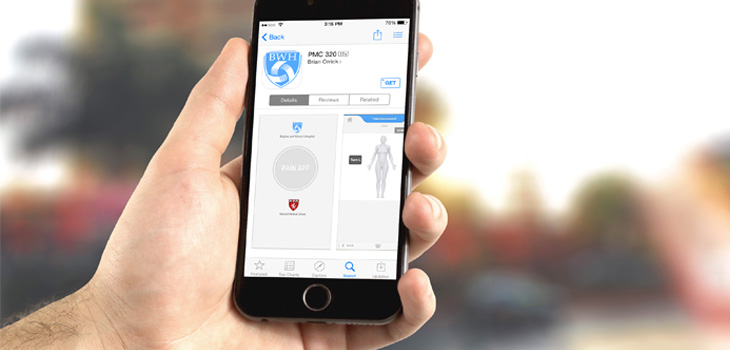
For the many millions who battle chronic pain, there is a new smartphone app that can help them manage their condition. The app, which prompts patients to answer questions throughout the day, was developed at Brigham and Women’s Hospital.
Chronic Pain? There’s an App for That
2 min read Premium comments
Secondary

Robert Jamison, M.D., professor of anesthesia and psychiatry at the Brigham and Harvard Medical School, is on the development team. He told OTW, “We developed this pain app with input from the physicians at the Pain Management Center of Brigham and Women’s Hospital. Most of the physicians in our clinic are anesthesiologists and pain specialists. We also have a neurologist, psychiatrist, and physiatrist. Just for your readers, we collaborate closely with the orthopedists in our hospital in managing chronic pain patients.
Asked about the thinking behind the questions that patients were asked, Dr. Jamison stated, “We have a history of developing electronic pain assessment software using PDAs. These programs reflect the types of items found in comprehensive validated pain assessment tools. Our pain app gathers information about the whole pain experience including pain intensity, activity interference, mood, sleep, medication, side effects, and general quality of life. We believe the more we understand what the patients are experiencing the better our chance in offering effective strategies for improvement.”
When asked about the psychological benefits he is seeing in patients, Dr. Jamison noted, “Our app offers 2-way messaging and patients receive feedback about their changes over time. We believe that this type of feedback helps the patients to feel that someone is watching them and, in turn, along with relevant information to manage pain, can improve their ability to cope. We also post line graphs of daily ratings from the pain app directly onto the patient’s electronic medical record and this allows each provider to gain some understanding of how the patient has been doing between visits. We believe that this information has a psychological benefit for the users as well.”
As for what might be of special interest to orthopedic surgeons, Dr. Jamison commented, “Unfortunately orthopedic surgery, like most of medicine, is not a science. Some individuals benefit from surgery and others do not. We still have to rely on what patients tell us in the clinic, how well they remember things, and what impressions they give about their condition. Tracking patients on a daily basis before surgery can offer a lot of information about how the patient is doing and identify possible risk factors for or against surgery. Also, having postoperative information about each patient’s pain, mood, function, sleep, and medication use would be valuable in managing patients after surgery.”
“The future of medicine will include sharing more information between patients and providers and offering preventative strategies for managing chronic diseases, including symptoms of pain. We believe that innovative mobile health technology will play an important role in the future of healthcare.”
Author
React:
Discussion
This is a fascinating development. In my practice we've seen similar outcomes with the revised protocol. The key differentiator seems to be patient selection criteria. Has anyone else noticed the correlation with BMI thresholds?
Great point. I'd push back slightly on the conclusion, the sample size in the cited study is too small to draw population-level inferences. That said, the directional signal is compelling and worth a larger RCT.
We implemented a similar approach last year. Early results are promising but we're still gathering 12-month follow-up data. Happy to share our protocol if anyone is interested.
Join the conversation
Orthopedic professionals are discussing this. Sign in and upgrade to read every comment and add your voice.