
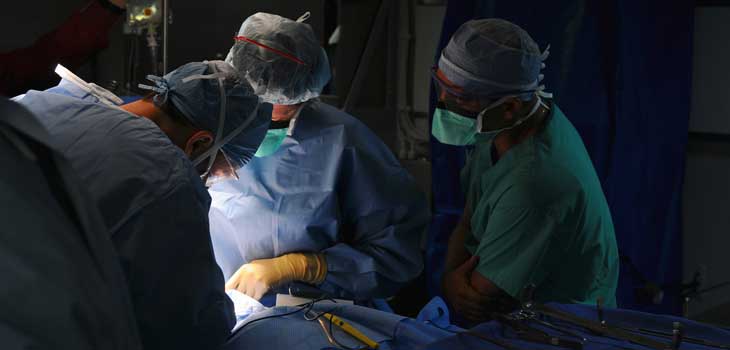
This Winnipeg Team doesn’t skate on ice and score on power plays. This team of 50 surgeons, nurses, physiotherapists and anesthesiologists are on the front lines of treating poor patients. No doubt there are a couple or more hockey players on this team who can score from the midline, but for this trip they are flying to Nicaragua for four busy days and, led by David Hedden, M.D., will perform approximately 60 knee replacements.
Winnipeg Team Replaces Knees in Nicaragua
2 min read Premium comments
Secondary
As Hedden explained, “Everything [in Nicaragua] is on its last legs. We take almost everything we need with us. We invariably get a couple of patients who are carried in who have not walked in 6 or 12 months. We replace their knees and they walk out 4 days later.”
According to Geof Kirbyson, a writer for the Winnipeg Free Press, this will be the group’s fourth annual trip and each time their goal is to do a few more surgeries than they did the year before. Each time they find that they get more efficient. Local surgeons hand over their operating rooms but invariably they are sparsely furnished. Hedden says that they cannot rely on the local infrastructure. “We bring our own drugs, IVs, implants and surgical implements. It’s a busy time but we crank them through, ” he said.
Members of the team take voluntary leave from their jobs and pay much of the cost of their transportation and accommodations. As Hidden explains, “We get down there and work our butts off. We spend the last two days making sure there are no complications. Our biggest fear is a complication after we leave. The local Nicaraguan staff comes to the OR every day and we give lectures to doctors, nurses and physiotherapists on how to manage problems.”
Kirbyson quoted a Nicaraguan doctor, now living in Winnipeg, who is participating in the trip. He said, “Operation Walk can do in a few days what a hospital can do in a year. It’s a big opportunity for me to give back to Nicaragua. If you break your hip in Nicaragua, your family is required to go to the pharmacy, buy the implants and bring them to the hospital where the surgeon implants them. Their health-care system is absolutely broken.”
Author
React:
Discussion
This is a fascinating development. In my practice we've seen similar outcomes with the revised protocol. The key differentiator seems to be patient selection criteria. Has anyone else noticed the correlation with BMI thresholds?
Great point. I'd push back slightly on the conclusion, the sample size in the cited study is too small to draw population-level inferences. That said, the directional signal is compelling and worth a larger RCT.
We implemented a similar approach last year. Early results are promising but we're still gathering 12-month follow-up data. Happy to share our protocol if anyone is interested.
Join the conversation
Orthopedic professionals are discussing this. Sign in and upgrade to read every comment and add your voice.