
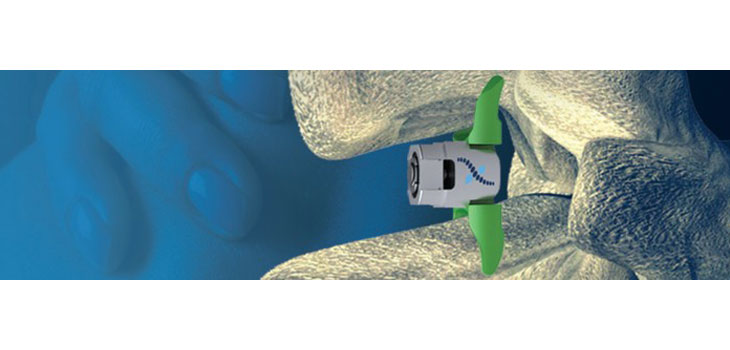
The FDA issued a rare PMA Approval Order (pre-market approval) on May 26, 2015 as the agency approved VertiFlex, Inc.’s Superion Interspinous Spacer System. The FDA’s expert orthopedic panel recommended approval of the device back in February.
VertiFlex’s Superion Interspinous Spacer Approved
2 min read Premium comments
Secondary
Least Invasive Spinal Stenosis Treatment
A statement from the company said the Superion has proven to be a “safe, effective and least invasive solution for the treatment of spinal stenosis, in a mostly Medicare-aged population.” The device is indicated for moderate lumbar spinal stenosis.
The device is designed to achieve indirect spinal decompression for patients suffering from neurogenic intermittent claudication due to moderate lumbar spinal stenosis. It is implanted minimally invasively through a cannula designed to be less traumatic to the patient. It can be implanted under general or local anesthesia.
Indication for Use
The proposed “Indication for Use” for the device, as stated in the PMA, is as follows:
Treat skeletally mature patients suffering from pain, numbness, and/or cramping in the legs (neurogenic intermittent claudication) secondary to a diagnosis of moderate lumbar spinal stenosis, with or without Grade 1 spondylolisthesis, confirmed by X-ray, MRI and/or CT evidence of thickened ligamentum flavum, narrowed lateral recess, and/or central canal or foraminal narrowing.
Patients with impaired physical function who experience relief in flexion from symptoms of leg/buttock/groin pain, numbness, and/or cramping, with or without back pain. The Superion ISS may be implanted at one or two adjacent lumbar (L) levels in patients in whom treatment is indicated at no more than two levels, from L1 to L5.
The company also noted several highlights of the device, including:
- Largest, most robust IDE (investigational device exemption) trial for moderate lumbar spinal stenosis.
- Demonstrated clinical success of >80% in all major components of the composite primary endpoint at 24 months, maintaining durability of effect through 36 months.
- Patients exhibited similar leg pain improvement, as measured by VAS (Visual Analog Scale), compared to published literature on open surgical decompression.
- Healthcare economic data demonstrated cost-effective equivalency to open surgical decompression.
- Successful implantations in over 2, 000 patients around the world.
Avoiding Open Spine Surgery
The company’s co-Medical Director, Nick Shamie, M.D., Professor & Chief, UCLA Orthopaedic Spine Surgery, said, “As an early adopter of interspinous spacers, they have provided tremendous improvement for my patients suffering from lumbar stenosis. As a next-generation technology, Superion offers the potential for even greater clinical benefit, with the least invasive indirect decompression possible, and the ability for patients to avoid traditional open spine surgery.”
Compared to X-STOP
Clinical trials compared the Superion to Medtronic plc’s X-STOP. At 24-months follow-up, according to FDA documents, 52.7% of the Superion group and 50.2% of the X-STOP group were considered successful. However, study data showed spinous process fractures developed after treatment in 16.3% of Intent-to-Treat (mITT) subjects in the Superion ISS group and 8.5% of X-STOP mITT subjects. Earl Fender, company president and CEO, said after the February FDA panel meeting that the device “demonstrated clinical success of >80% in all components of the composite primary endpoint.”
The company did not note if there were any post-approval requirements to continue tracking patients from the original clinical trial.
Author
React:
Discussion
This is a fascinating development. In my practice we've seen similar outcomes with the revised protocol. The key differentiator seems to be patient selection criteria. Has anyone else noticed the correlation with BMI thresholds?
Great point. I'd push back slightly on the conclusion, the sample size in the cited study is too small to draw population-level inferences. That said, the directional signal is compelling and worth a larger RCT.
We implemented a similar approach last year. Early results are promising but we're still gathering 12-month follow-up data. Happy to share our protocol if anyone is interested.
Join the conversation
Orthopedic professionals are discussing this. Sign in and upgrade to read every comment and add your voice.