
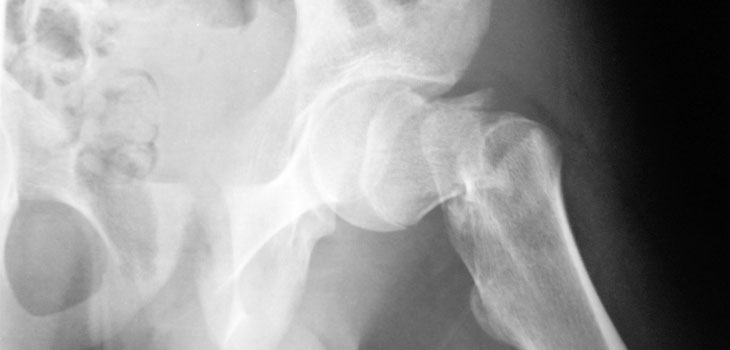
A hip fracture, once believed by elderly female patients to be the equivalent of a near death sentence, remains a dreaded incident. Calin S. Moucha, M.D., one of a trio of researchers who studied spinal anesthesia for hip fracture patients said, “Surgery to repair hip fractures can be associated with high morbidity and mortality, because these fractures, typically, occur in elderly patients who have existing medical problems.”
Spinal Anesthesia Best for Hip Repair
1 min read Premium comments
Secondary
With more than 1.6 million people around the world fracturing their hips, any incremental benefit surgeons can bring to their task of repair is significant. As Moucha added, “It is important to identify factors we can modify perioperatively to potentially decrease these risks.”
One of those factors is the choice of anesthesia used during surgery. In a study of 6, 133 patients, taken from the American College of Surgeons National Surgical Quality Improvement Program database they found that one such improvement may be the use of spinal anesthesia rather than general anesthesia during hip fracture surgery.
Jennie McKee, writing for The Daily Addition, AAOS News, wrote that surgeons found that using spinal anesthesia resulted in a lower risk of 30-day complications, reduced rates of thromboembolism, blood loss, need for transfusion, operative time, and superficial wound infection.
According to McKee, this is the largest study to evaluate the short term complications of hip fracture repair as they relate to the anesthesia technique. Also the data analyzed in the study are based on a patient population taken from academic and community hospitals across the country.
McKee quotes Moucha as saying, “The optimal anesthesia modality for the surgical treatment of hip fractures is controversial. According to our data, however, spinal anesthesia should be considered over general anesthesia for hip fracture repair procedures identified by CPT codes 27245 and 27244 because it is linked to fewer 30-day complications in patients who undergo these procedures.”
Author
React:
Discussion
This is a fascinating development. In my practice we've seen similar outcomes with the revised protocol. The key differentiator seems to be patient selection criteria. Has anyone else noticed the correlation with BMI thresholds?
Great point. I'd push back slightly on the conclusion, the sample size in the cited study is too small to draw population-level inferences. That said, the directional signal is compelling and worth a larger RCT.
We implemented a similar approach last year. Early results are promising but we're still gathering 12-month follow-up data. Happy to share our protocol if anyone is interested.
Join the conversation
Orthopedic professionals are discussing this. Sign in and upgrade to read every comment and add your voice.