
Moximed, Inc. has just raised an additional $33 million to try and gain FDA approval for its KineSpring System, a joint unloading knee implant for pre-arthroplasty patients. Think shock-absorber to put a spring in your step.
Moximed Raises $33 Million for Knee Shock Absorber
2 min read Premium comments
Secondary
According to the company, it is designed to be a first surgical option for patients with knee osteoarthritis (OA). It is intended to treat the symptoms of pain and loss of knee function secondary to OA of the medial compartment of the knee.
Shock Absorber
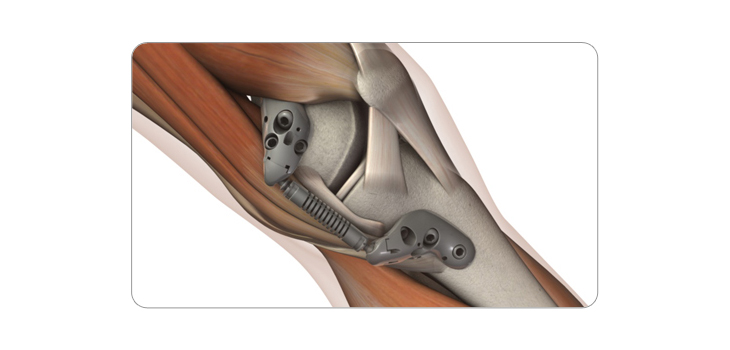
The shock absorber reduces knee joint load by up to 13 kg. and is implanted in the extra-capsular space along the medial side of the joint. It actively unloads the knee during the stance phase of gait. Even more importantly, claims the company, the system is “completely joint sparing: since the device is extra-capsular and extra-articular, no bone, ligament, or cartilage is removed. Therefore, the procedure is reversible.”
Professor Philipp Niemeyer, M.D., of the University of Freiburg and a clinical investigator in Moximed’s GOAL Study commented, “The clinical benefit of joint unloading is proven to reduce pain. However, while some methods of unloading will transfer the load to other parts of the knee and can actually accelerate OA progression, the KineSpring System has been shown to reduce overall loading on the knee and can be a valuable treatment option. In my practice, patients have been very interested in exploring this treatment option.”
If the underlying biomechanical problem with a knee is joint overload due to obesity, anatomy, or trauma and the pathological biomechanics are left untreated, then, says the company, “the OA cascade continues and the patient often suffers through several rounds of unsuccessful therapies until he or she is a candidate for arthroplasty. The KineSpring System specifically addresses the biomechanics behind joint overload.”
FDA Approval Quest
Kevin Sidow is the CEO of the company. He is well known to our readers having shepherded St. Francis Medical Technologies, Inc.’s X-STOP through the FDA approval process. Kyphon, Inc. purchased St. Francis Medical for $725 million in January 2006. Medtronic, Inc. then purchased Kyphon for almost $4 billion in 2007. Before joining St. Francis Medical, Sidow was the worldwide president of DePuy, Inc. where he oversaw the global orthopedic, spine, trauma and sports medicine business.
“The new capital will support the company’s efforts to gain FDA approval of the KineSpring System and grow commercial sales in Europe, ” said Sidow in a May 7, 2015 press release. The system is CE marked and available in major European markets. It has been implanted in over 1, 000 cases worldwide and is investigational in the U.S.
The new funding comes from new investor Vertex Venture Holdings Ltd. and returning investors New Enterprise Associates, Gilde Healthcare Partners, Morgenthaler Ventures, and GBS Venture Partners.
Author
React:
Discussion
This is a fascinating development. In my practice we've seen similar outcomes with the revised protocol. The key differentiator seems to be patient selection criteria. Has anyone else noticed the correlation with BMI thresholds?
Great point. I'd push back slightly on the conclusion, the sample size in the cited study is too small to draw population-level inferences. That said, the directional signal is compelling and worth a larger RCT.
We implemented a similar approach last year. Early results are promising but we're still gathering 12-month follow-up data. Happy to share our protocol if anyone is interested.
Join the conversation
Orthopedic professionals are discussing this. Sign in and upgrade to read every comment and add your voice.