
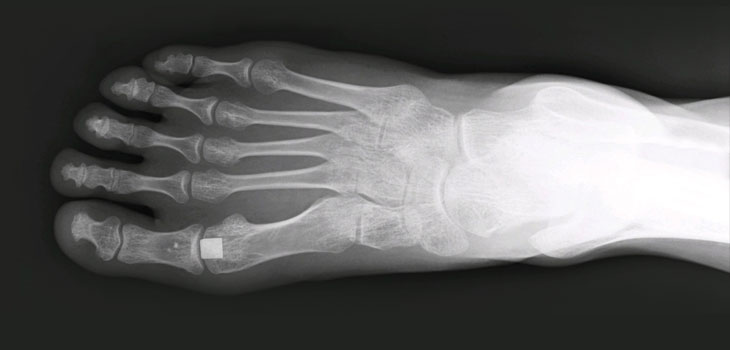
Cartiva, Inc, a company in Alpharetta, Georgia, that develops products to treat cartilage injuries has submitted the final module for its pre-market approval (PMA) application to the FDA. The product is called the Cartiva Synthetic Cartilage Implant (SCI). The final module covers the clinical results from the motion trial that evaluated the safety and effectiveness of Cartiva CI for the treatment of osteoarthritis at the base of the great toe.
Great Toe Study Leads to FDA’s PMA
1 min read Premium comments
Secondary
The study involved the enrollment of 236 patients at 12 centers in Canada and the United Kingdom. The trial was designed to determine the safety and efficacy of Cartiva SCI in comparison to arthrodesis (fusion) for reducing the debilitating pain associated with osteoarthritis in the great toe. Patients were randomized 2:1 to either Cartiva SCI or arthrodesis. The primary endpoint for the trial was a composite evaluation of pain, function and safety.
“The completion of our PMA submission is the most significant milestone in the company’s history and is the culmination of many years of dedicated research, ” said Cartiva President and Chief Executive Officer Tim Patrick. “This is the largest and most rigorous FDA trial ever completed for this clinical condition. We look forward to working with FDA to bring the first synthetic cartilage product to market.”
According to the press release, Cartiva SCI is comprised of a proprietary polyvinyl alcohol (PVA) hydrogel designed to mimic natural cartilage. PVA is a synthetic polymer prepared by the hydrolysis of polyvinyl acetate and has been used in medical device applications for over 20 years. Cartiva, Inc. customizes the PVA hydrogel to meet defined functional requirements. Cartiva officials state that the physical properties of Cartiva SCI, including the water content, compressive properties and low coefficient of friction, are similar to natural cartilage.
Author
React:
Discussion
This is a fascinating development. In my practice we've seen similar outcomes with the revised protocol. The key differentiator seems to be patient selection criteria. Has anyone else noticed the correlation with BMI thresholds?
Great point. I'd push back slightly on the conclusion, the sample size in the cited study is too small to draw population-level inferences. That said, the directional signal is compelling and worth a larger RCT.
We implemented a similar approach last year. Early results are promising but we're still gathering 12-month follow-up data. Happy to share our protocol if anyone is interested.
Join the conversation
Orthopedic professionals are discussing this. Sign in and upgrade to read every comment and add your voice.