
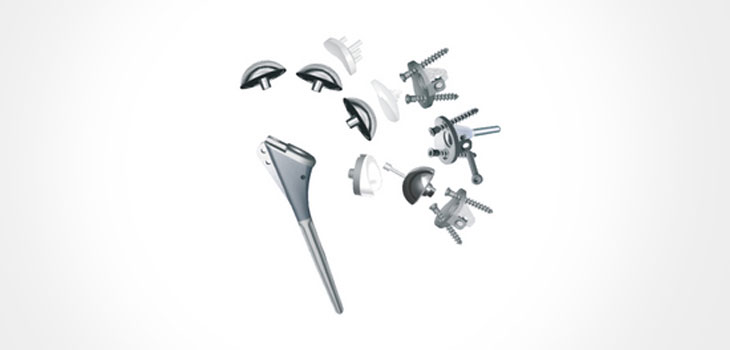
A bulletin from the Food and Drug Administration (FDA) reports that the agency has given its approval to FH Orthopedic’s Arrow reverse shoulder long keel glenoid base plate. The French device maker announced that, following approval, it is planning an immediate U.S. launch of its product.
French Shoulder Device Gains FDA Approval
1 min read Premium comments
Secondary
According to Jason Scott, writing for FDA News, the short keel version of the plate was the first universal system for shoulder arthroplasty to be approved. That approval came in 2010. The company claims that the Arrow system enables surgeons to implant a reverse or anatomical prosthesis using the same set of instruments.
“The long keel plate is indicated for severe shoulder arthropathy patients and those suffering from a grossly deficient rotator cuff.” Those with a failed shoulder joint replacement that have a grossly deficient rotator cuff can also benefit, writes Scott.
“Patients must have a functional deltoid muscle and enough glenoid bone stock to have the device installed. The humeral stem is meant for cemented or cement-less application; the metal-back glenoid base plate is meant for cement-less application using bone screws for fixation, ” according to the FDA release.
Author
React:
Discussion
This is a fascinating development. In my practice we've seen similar outcomes with the revised protocol. The key differentiator seems to be patient selection criteria. Has anyone else noticed the correlation with BMI thresholds?
Great point. I'd push back slightly on the conclusion, the sample size in the cited study is too small to draw population-level inferences. That said, the directional signal is compelling and worth a larger RCT.
We implemented a similar approach last year. Early results are promising but we're still gathering 12-month follow-up data. Happy to share our protocol if anyone is interested.
Join the conversation
Orthopedic professionals are discussing this. Sign in and upgrade to read every comment and add your voice.