
LINKSpine, a company in Rockaway, New Jersey, that, in its own words, is “focused on simple, less invasive implants and techniques for spinal surgery” has received 510(k) clearance from the FDA for its product FacetLINK.
FacetLINK by LINKSpine Link-Up 510(k) Clearance
1 min read Premium comments
Secondary
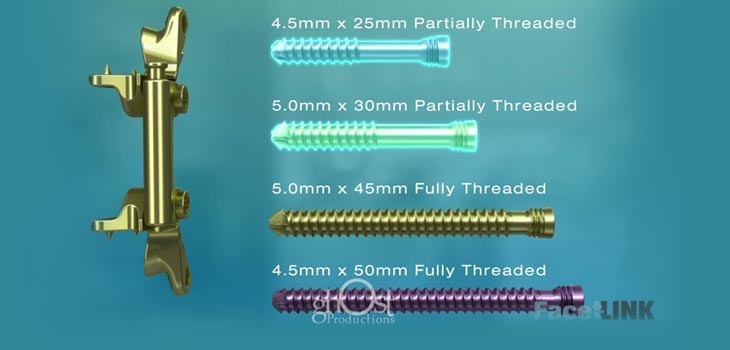
FacetLINK uses two screws and a plated cross-connector assembly to stabilize the spine following a tissue-sparing midline or microsurgical decompression. According to the company, the plate assemblies are available in numerous sizes as well as an expandable version to accommodate various anatomical and pathological scenarios.
The company’s press release quotes several surgeons who have made use of LINKSpine. One is Christopher Chaput, M.D., an orthopedic spine surgeon and director of orthopedic research at Baylor Scott and White in Temple, Texas, who said, “FacetLINK provides me with an additional tool for treating cases with mild to moderate instability, where a less extensive exposure is desired. The ability to achieve bilateral fixation in these cases through the unilateral exposure I work through for my micro-decompression is an attractive feature to me.”
Faheem Sandhu, M.D., professor of neurosurgery and director of spine surgery at Medstar Georgetown Hospital in Washington, DC, said: “the FacetLINK platform offers the option to use a small implant that secures rigid biomechanical stability, but without the additional tissue exposure required to seat conventional pedicle screw and rod fixation. This is an attractive alternative for cases with mild to moderate instability.”
Massimo Calafiore, president of LINKSpine added, “FacetLINK fulfills a desire for a simple, less invasive approach to lumbar spine surgery.”
Author
React:
Discussion
This is a fascinating development. In my practice we've seen similar outcomes with the revised protocol. The key differentiator seems to be patient selection criteria. Has anyone else noticed the correlation with BMI thresholds?
Great point. I'd push back slightly on the conclusion, the sample size in the cited study is too small to draw population-level inferences. That said, the directional signal is compelling and worth a larger RCT.
We implemented a similar approach last year. Early results are promising but we're still gathering 12-month follow-up data. Happy to share our protocol if anyone is interested.
Join the conversation
Orthopedic professionals are discussing this. Sign in and upgrade to read every comment and add your voice.