
A Swedish start-up, called BoneSupport, has added the antibiotic gentamicin to its product CERAMENT.
Injectable Bone Substitute Elutes Gentamicin
1 min read Premium comments
Secondary
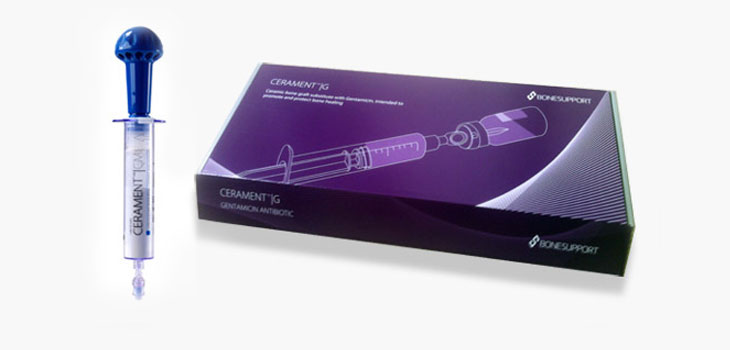
BoneSupport’s original product, known as CERAMENT, is a synthetic bioceramic and injectable bone substitute made of calcium sulfate and hydroxyapatite combined with liquid Iohexol. The company’s most recent version, CERAMENT G, elutes the antibiotic gentamicin.
“The drug eluting properties of CERAMENT have the potential to change the standard of care in the management of bone infections and joint replacement surgery, ” BoneSupport CEO Lloyd Diamond said in a statement. “We are uniquely positioned to address an unmet clinical need.”
In clinical testing, CERAMENT demonstrated bone remodeling within 6 to 12 months, according to Fierce Medical Devices writer Stacy Lawrence. Doctors injected the synthetic bone substitute, designed to mimic the properties of cancellous bone, under local anesthesia. This tissue is found at the end of long bones. It is porous and it typically weaker than cortical bone, which makes up the shaft of long bones.
In September, the startup presented data for CERAMENT G showing that after six months, 75% of osteomyelitis (bone infection) patients demonstrated complete wound healing and full bone remodeling. And 80% of the remaining patients in the study showed evidence of ongoing remodeling.
Most cases of osteomyelitis are due to staphylococcus bacteria that are commonly on the skin’s surface. According to researchers, the infection can be introduced into the bone via the bloodstream, an open wound or when bone punctures the surface of the skin. Prosthetic infections, diabetic foot ulcers as well as injury or trauma can also introduce infections.
“We have a truly disruptive technology with CERAMENT G. Our aim is to open a whole new way of delivering medicines that have the potential to transform outcomes, ” BoneSupport Executive Chairman Oern Stuge, M.D., said in a statement.
Author
React:
Discussion
This is a fascinating development. In my practice we've seen similar outcomes with the revised protocol. The key differentiator seems to be patient selection criteria. Has anyone else noticed the correlation with BMI thresholds?
Great point. I'd push back slightly on the conclusion, the sample size in the cited study is too small to draw population-level inferences. That said, the directional signal is compelling and worth a larger RCT.
We implemented a similar approach last year. Early results are promising but we're still gathering 12-month follow-up data. Happy to share our protocol if anyone is interested.
Join the conversation
Orthopedic professionals are discussing this. Sign in and upgrade to read every comment and add your voice.