
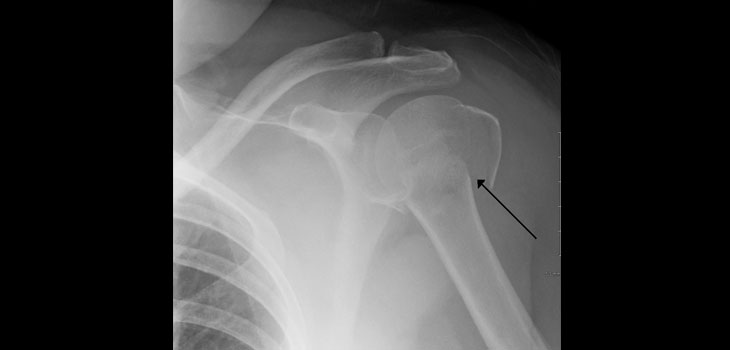
The FDA has granted a clearance to commercialize an expandable fracture cage for the repair of shoulder fractures, called the Conventus PH Cage. The expandable cage is made of nitinol, a nickel titanium alloy. The cage expands with the bone creating what the company calls “robust fixation, ” preventing further collapse of the fracture.
FDA Clears Cage for Proximal Humerus Fractures
1 min read Premium comments
Secondary
According to the company’s release, until now, patients needing surgical treatment for multipart fractures of the shoulder’s proximal humerus (PH) have been limited to traditional fixation technologies.
“For years, shoulder surgeons have expressed the need for more versatile surgical options to repair simple to complex proximal humeral fractures, ” said Paul Buckman, Conventus Orthopaedics CEO.
“The Conventus PH Cage will expand what is possible in patient care by enabling surgeons to repair a wider variety of proximal humeral fractures through less invasive means. We believe this is another important building block in our technology platform and has the potential to transform the repair of shoulder fractures.”
Conventus designed the device in close consultation with a group of surgeon advisors. The design is aligned with the principles of the Conventus platform technology, which emphasize preservation of tissues and blood supply at the fracture site thus creating a strong foundation by stabilizing bone fragments and facilitating early motion through less invasive procedures.
“The PH Cage provides intramedullary fragment support and flexible fixation within the proximal humerus. These features help solve the problems that have been shown to compromise the outcomes with traditional techniques of open reduction and internal fixation as well as hemi-arthroplasty procedures for complex proximal humeral fractures, ” said Andrew Schmidt, M.D., Chief of the Department of Orthopedics, Hennepin County Medical Center. “This versatile implant provides robust fixation and facilitates surgeons’ needs to confidently proceed with a challenging repair, knowing they can even stabilize osteoporotic bone fragments.”
Conventus, of Minneapolis, Minnesota, plans a measured U.S. market introduction in the coming weeks.
Author
React:
Discussion
This is a fascinating development. In my practice we've seen similar outcomes with the revised protocol. The key differentiator seems to be patient selection criteria. Has anyone else noticed the correlation with BMI thresholds?
Great point. I'd push back slightly on the conclusion, the sample size in the cited study is too small to draw population-level inferences. That said, the directional signal is compelling and worth a larger RCT.
We implemented a similar approach last year. Early results are promising but we're still gathering 12-month follow-up data. Happy to share our protocol if anyone is interested.
Join the conversation
Orthopedic professionals are discussing this. Sign in and upgrade to read every comment and add your voice.