
David D. Teuscher, M.D., an orthopedic surgeon and a military veteran, is now president of the American Academy of Orthopaedic Surgeons (AAOS) Board of Directors. Dr. Teuscher, a partner and past president of the Beaumont Bone & Joint Institute, served on the AAOS Board of Directors and as chair of the Board of Councilors from 2011 to 2012.
David D. Teuscher, M.D. Assumes Presidency of AAOS
2 min read Premium comments
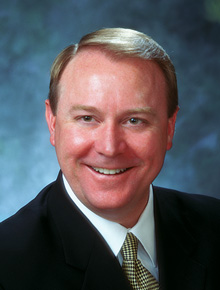
After earning his bachelor’s degree from the University of Illinois at Urbana-Champaign and medical degree from the University of Texas Medical School in San Antonio, Texas, Dr. Teuscher completed an internship and residency at the Brooke Army Medical Center at Fort Sam Houston, in San Antonio, Texas. Dr. Teuscher is a U.S. Army veteran who served in operations Desert Shield and Desert Storm, and completed 13 years of military service as the chief of surgery at Fort Sill in Oklahoma.
“David is a skilled orthopaedic surgeon, a distinguished veteran of our armed forces, a hardworking Academy volunteer, and a passionate advocate for patients and the orthopaedic profession, ” said Frederick M. Azar, M.D., outgoing AAOS president, in the March 26, 2015 news release. “We are fortunate to have such an experienced and committed individual at the helm of this organization.”
Dr. Teuscher noted, “Earlier this year, the Academy opened a new state-of-the-art Orthopaedic Learning Center near Chicago. In addition, the Academy hopes to utilize technology and alternative learning models to enhance global access to the organization’s many educational courses, programs and tools, including those offered at the annual meeting.”
As indicated in the news release, improving surgical safety, ensuring value for musculoskeletal care, and expanding access to the Academy’s educational programs are among Dr. Teuscher’s priorities for the coming year.
Dr. Teuscher told OTW, “The Academy has outlined the specific value of five orthopaedic procedures—knee, ACL [anterior cruciate ligament], rotator cuff, disc repair and hip fracture—on the A Nation in Motion website. We are hoping to expand the number of procedures that we highlight, as well information on the great value that orthopaedics brings to the economy, and to individuals in helping them to get back in the game, back to work and back to life. Yes, what we do may seem expensive, but no, or suboptimal, orthopaedic care is even more expensive.”
To improve patient safety, the Academy this year is planning a National Surgical Safety Summit, in conjunction with the American College of Surgeons and the entire perioperative community, to brainstorm and collaborate new ways to reduce surgical errors.
“We know there is no quality patient experience unless it is a safe experience, ” said Dr. Teuscher. “Any error is unacceptable.”
Author
React:
Discussion
This is a fascinating development. In my practice we've seen similar outcomes with the revised protocol. The key differentiator seems to be patient selection criteria. Has anyone else noticed the correlation with BMI thresholds?
Great point. I'd push back slightly on the conclusion, the sample size in the cited study is too small to draw population-level inferences. That said, the directional signal is compelling and worth a larger RCT.
We implemented a similar approach last year. Early results are promising but we're still gathering 12-month follow-up data. Happy to share our protocol if anyone is interested.
Join the conversation
Orthopedic professionals are discussing this. Sign in and upgrade to read every comment and add your voice.