
Winners of the $20, 000 Kappa Delta Sorority Award, given at the annual meeting of the American Academy of Orthopaedic Surgeons, do not take on easy or simple problems. The medical foe this year’s winning team challenged was arthritis—America’s most common disability. One in three adults of working age has arthritis. And the number is growing.
AAOS Award Winning Paper Presented Stunning Conclusion
5 min read Premium comments
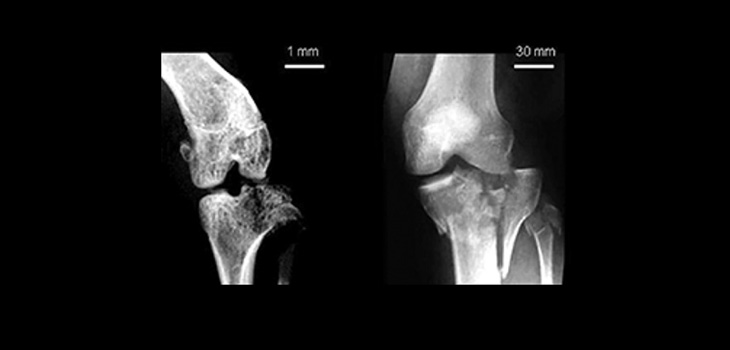
Arthritis is a particularly difficult and recalcitrant foe. In the case of closed articular fractures, the incidence of arthritis doesn’t fall into a neat hypothesis. Does a fracture injury cause chondrocytes to die thereby leading to arthritis? Not necessarily it turns out. This paper showed that a new model based on the inflammatory process of injury may well explain arthritis better.
When the award was announced for “Joint degeneration following closed intraarticular fracture in the mouse knee: A model of posttraumatic arthritis (J Orthop Res 2007;25:578–592)” a quartet of happy medical warriors took the stage—led by Steven A. Olson, M.D., a trauma surgeon and professor of orthopedic surgery at Duke University School of Medicine. Joining him were colleagues and honorees Virginia Byers Kraus, Ph.D., M.D., professor of medicine, Division of Rheumatology, Duke Molecular Physiology Institute; Janet Huebner, M.S., senior laboratory analyst; and Bridgette Furman, B.S, research analyst, Orthopaedic Research Laboratories—when this paper won the prestigious Kappa Delta Award.
Also honored and recognized was Farshid Guilak, Ph.D., director of the Orthopaedic Research Laboratory.
Asking the Question in a New Way
Closed articular fracture (a break that crosses the surface of a joint) will almost certainly develop post-traumatic arthritis (PTA) within a year. (The U.S. military report that joint degradation following injury is the most common cause of a soldier’s being judged unfit for duty.)
But, the researchers noted, arthritis developed in some accurately reduced joints while not in some mal-reduced fractures. Treating the injury—reducing the fracture— did not, in other words, predictably stop arthritis.
So the team decided to look at the problem in a new way. They decided to look at the metabolics of the knee following injury and, more specifically, at what was going on in the synovium, the lining tissue of the joint, following injury.
Asking the question in a new way, they hoped, would provide insights into the mechanisms that lead to PTA after an injury. With luck they might also find new therapeutic approaches that could improve treatments for joint injury.
But, fortunately, not everything went the way they expected. In the process of conducting their study the researchers made new, important discoveries that have long-term implications for the eventual successful treatment of arthritis.
The Experiment
The award winning scientists began with an experimental model of a closed intra articular fracture of a knee joint on the hind legs of individuals in the strain of mice labeled C57BL/6. The opposite hind limb of the animals was designated the control.
Each mouse became its own control.
The team created fractures with a computer controlled testing system and sacrificed the mice at 4, 8 and 50 weeks following the fracture. Histologies revealed that the experimental joint developed PTA changes within 8 weeks post-surgery. The differences persisted at 50 weeks post-surgery.
Here Come Super Healers!
Then came the big surprise.
The researchers decided to test their results on a different strain of mice. They chose MRL/MpJ because other researchers had reported that these mice had spontaneously healed the ear punches researchers had made in their ears for identification purposes. Mouse ears consist of cartilage. How did these mice do it?
Olson and his team ran the MRL/MpJ mice through the same fracture tests that the C57BL/6 mice had experienced. When they compared results they found that the MRL/MpJ mice showed no signs of PTA.
The team then looked at a lot of comparisons between the two mice strains to see what could account for the differences. What they learned is that both mice strains had an initial inflammatory post injury response. But the MRL mouse calmed that inflammation quickly.
When the team conducted a cytokine analysis they found a lower systemic (serum) levels of the pro-inflammatory cytokine interleukin-1alpha (IL-1α) and higher levels of the anti-inflammatory cytokines IL-4 and IL-10 in the MRL/MpJ mice.
They wrote, “The study shows that the MRI/MpJ mouse is relatively protected from post-traumatic arthritis after an intra articular fracture.”
They labeled these mice “super-healers.”
Checking the Synovial Fluid
The next step, in collaboration with the Rheumatology faculty, was to analyze the synovial fluid and see what clues might exist there about intra articular knee environment for these super healers. In the synovial fluid of the super healers the team found a marker for arthritis. More mice, from both strains, were injured, sacrificed after 8 weeks and their synovial fluid examined.
They found that the C57BL/6 mice had all developed PTA and also had a gene expression of inflammatory cytokines and chemokines demonstrating 54 of the 84 inflammatory genes. In contrast the MRL/MpJ mice had only 33 of the inflammatory genes and 7 of the 84 genes were down-regulated.
Il-1Ra or Anakinra
The evolving theory from the two different mice models was that inflammation and its duration following injury was positively correlated with PTA. To test that hypothesis, the team decided to treat some injured mice with an IL-1 receptor antagonist. In plain English, that means that this compound could block the ability of the inflammatory compound from binding with the nerve receptors and, thereby, reducing inflammation.
When the team injected IL-1 in the joint the mice “demonstrated significantly reduced cartilage degeneration in the fractured knee compared to all other treatment groups.” (Il-1Ra is Anakinra, a drug made for humans by Kineret of Stockholm, Sweden.)
But when IL-1 was delivered to the mice systemically, no change.
So What Does It All Mean?
This award-winning paper is the first report which showed not only that a pharmacologic intervention could lessen the severity of PTA after an intra-articular fracture but why that might occur.
The paper also presented an elegant argument that the healthy knee is more than a set of articulating bones. It is an entire eco-system which includes the synovium, a healthy nutrient rich synovial fluid, a proper Ph level and a healthy knee metabolism. When that system is traumatized, PTA can develop IF there is no intervention to attenuate synovial inflammation and, therefore, the disrupted eco-system of the knee.
It also means that because there is evidence of increased synovial inflammation after an intra-articular fracture in humans and that the time frame for treating patients is short—on the order of hours or days—there is a good argument for a biologic therapy as an adjunctive treatment for reducing inflammation and therefore the incidence of post-traumatic arthritis.
Author
React:
Discussion
This is a fascinating development. In my practice we've seen similar outcomes with the revised protocol. The key differentiator seems to be patient selection criteria. Has anyone else noticed the correlation with BMI thresholds?
Great point. I'd push back slightly on the conclusion, the sample size in the cited study is too small to draw population-level inferences. That said, the directional signal is compelling and worth a larger RCT.
We implemented a similar approach last year. Early results are promising but we're still gathering 12-month follow-up data. Happy to share our protocol if anyone is interested.
Join the conversation
Orthopedic professionals are discussing this. Sign in and upgrade to read every comment and add your voice.