
Excellent Outcomes in 80%+ of Patients Undergoing ACI in the Patella
80%+ of Patients Undergoing ACI in the Patella Excellent Results // Study: AIS Patients Should Stick With High Volume Centers // and More!
6 min read Premium comments
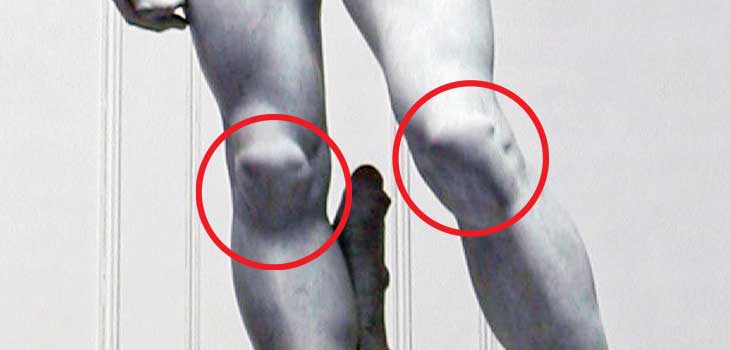
A multicenter study is shedding light on the dicey arena of autologous chondrocyte implantation (ACI) in the patella, an off-label indication for ACI. Andreas Gomoll, M.D., an orthopedic surgeon with Brigham and Women’s Hospital, tells OTW, “ACI in the patella has always been seen as something that does not provide great results. My colleagues and I conducted a multicenter study in Boston, Chicago, Indianapolis and Atlanta, where we found that the outcomes of this procedure are very comparable to those in the femoral condyles. We were quite surprised to see how well it works, something we attribute to the careful assessment and correction of patellofemoral mechanics. In the past this was not done…surgeons would do the cartilage repair, but did not consider the whole joint, such as soft tissue imbalances or tuberosity position. That is clearly vital in order to ensure a good biomechanical environment for your repair.”
“Our study, which included 110 patients, followed patients that were at least four years after ACI surgery for patellar defects. We employed several different patient reported outcome scales, and found that the vast majority of patients experienced clinically and statistically significant improvements in both pain and function. When asked, 93% patients said that they would undergo ACI again; 86% rated their knees as ‘good’ or ‘excellent’ at the last follow-up.”
“Traditionally, many surgeons have thought, ‘Let’s do the easiest thing to fill this pothole—microfracture!’ This works in small holes, but we know that it doesn’t work in large defects. In order to do a full study you would have to randomize against microfracture, even though there is plenty of, albeit, non-randomized evidence against doing it for large defects, especially in the patella.”
“This work is important because many insurance companies don’t cover ACI in the patella, thus many patients are missing out on this surgery. One research paper that has been quoted for years (Widuchowski, Knee 2007) said that 60% of people who have arthroscopy have a cartilage defect in the knee, with the patella being the second most common location. So this is a very common problem that is difficult to manage—especially in young, active patients. I am pleased, however, that there is a growing recognition that cartilage repair in the patella works, provided one carefully evaluates why these defects develop…and then fixes those reasons along with the cartilage defect itself.”
Study: Adolescents With Scoliosis Should Head to High Volume Centers
Low-volume surgeons might want to rethink if and how they operate on adolescents with idiopathic scoliosis. According to a new study from NYU Langone Medical Center, patients who have surgery in high volume centers are less likely to undergo a reoperation. Thomas Errico, M.D., chief of Spine at that institution and lead author on the study, told OTW, “Despite adequate brace treatment teens can experience curve progression to a point where the family needs to make a decision about surgical treatment. The curve is getting more pronounced, and the family has do decide not only on the timing and but also the surgeon and the hospital. My colleagues and I wanted to obtain clarity on the best evidence to guide these patients so that their families can make the best decision possible.”
“We utilized a New York State database, and found 3, 928 individuals who underwent surgery for adolescent idiopathic scoliosis (AIS). We classified the treating surgeons as either low volume (less than 6 AIS surgeries per year), medium (less than 43 per year), or high volume (43-228 per year). We did the same with the hospitals involved.”
“We found that there were fewer repeat operations by a significant amount: 14% of those who were treated by a low volume surgeon had to undergo reoperation. In contrast, only 5% of patients who were treated by a high volume surgeon needed a reoperation. In addition, the infection rate in the low volume group was 4.1%. In the medium group it was 1.2%, and in the high volume group it was .6%.”
“As for the hospitals themselves, the reoperation rate at low volume centers was 5.4%, at the medium volume centers it was 3.5% and ‘only’ 2.4% at the high volume centers.”
“In the past, we’ve seen research indicating that high volume surgeons are less likely to perform surgeries resulting in complications. Prior to this study, however, it wasn’t clear that going to a high volume surgeon would make it less likely that someone would have to undergo a reoperation.”
“This work is important because as physicians we must advise parents and patients. My hope is that surgeons who don’t perform many AIS surgeries will reconsider whether or not they should be doing these procedures. If they do want to undertake these operations, they should consider having a higher volume surgeons in the OR with them and at what hospital they perform the surgery. When I’m in the OR, and I turn around and ask for something, my staff is totally prepared. I don’t have to waste time looking for anything or explaining anything because they know exactly how and when things need to unfold. The xray techs, for example, have been involved in the surgery 1, 000 times and know the precise angle needed for proper imaging. Delays lengthen OR time and efficiency provides for the best results. If you put me in another hospital I wouldn’t be as good…even though I have the appropriate skills. It is the entire team working in tandem…that’s what gets it done right.”
Transfusions…What Is the Right Hgb Level?
Raise your hand if you are sure of when a blood transfusion is indicated in an anemic trauma patient…anyone? There is indeed a lack of clarity on what level of anemia is tolerable in these patients. Brian Mullis, M.D., an orthopedic surgeon with Eskenazi Health and an associate professor at Indiana University, told OTW, “While this issue has been studied in the total joint population, ours is the first prospective study to address the problem as related to orthopedic trauma patients. There is ample research indicating that allogenic transfusions significantly increase the risk of complications, including infection. It’s unclear why, but basic science research shows that these transfusions can cause lifelong immunosuppression. The blood cells lose permeability as they age, and with this there is an increased risk of problems with the kidneys and heart. I tend to be conservative, running down to a hemoglobin of 5. This is based on research with Jehovah’s Witnesses indicating that young, healthy patients can tolerate a level of 5 and that the related complication rate is low. There is a strong feeling amongst orthopedic surgeons that the hemoglobin should be kept at some magic number…but no one knows what that is.”
“My colleagues and I undertook a retrospective, case control study of 104 of my patients who ranged in age from 18-50. Admittedly, it was underpowered because there are not many people in the low hemoglobin group who were not transfused. We divided patients into two groups: one with the lowest Hgb level before transfusion (under 7 g/dL) and one with 7 g/dL or higher. Not only did we find a significant risk of complications related to transfusion, but with each unit transfused there was an increased risk of complications.”
“Most orthopedic surgeons get uncomfortable below 7 g/dL. Years ago the ‘magic’ number was 10 g/dL…then it was 9 g/dL. Now we know that given the right conditions, even 5 or 6 is acceptable. I will say that in patients who are experiencing dizziness or shortness of breath at rest, I would transfuse them because these may be early symptoms of hypoxia.”
“At present we are moving forward with a prospective randomized pilot study to determine if a large multicenter study is feasible. If we find that we need 50, 000 patients in order to do a multicenter study then that will be impossible. However, if we only need 300, then we can proceed. It’s especially challenging because you have to coordinate a multitude of details with anesthesiologists, physical medicine doctors, etc. And the problem from an anesthesia perspective is that there is no way to measure symptoms while in surgery, so you have to establish objective criteria (a 30% increase in heart rate, for example). Our single center study plans to enroll 100 patients, with 10% enrolled and randomized so far. We hope this study will give us more accurate information for surgeons and patients, then it will have been worth it.
React:
Discussion
This is a fascinating development. In my practice we've seen similar outcomes with the revised protocol. The key differentiator seems to be patient selection criteria. Has anyone else noticed the correlation with BMI thresholds?
Great point. I'd push back slightly on the conclusion, the sample size in the cited study is too small to draw population-level inferences. That said, the directional signal is compelling and worth a larger RCT.
We implemented a similar approach last year. Early results are promising but we're still gathering 12-month follow-up data. Happy to share our protocol if anyone is interested.
Join the conversation
Orthopedic professionals are discussing this. Sign in and upgrade to read every comment and add your voice.