
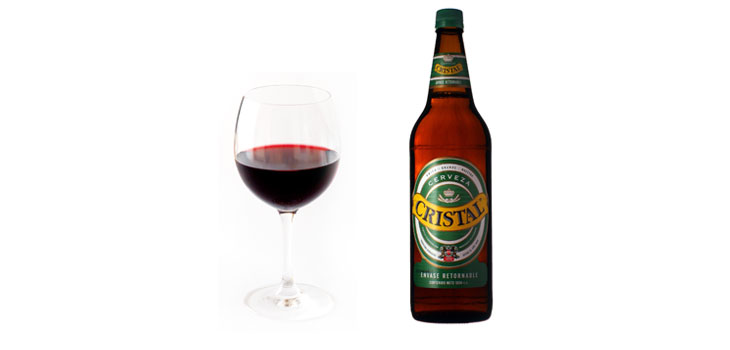
Wine lovers rejoice. Regular wine drinkers are less likely than drinkers of other beverages to develop knee osteoarthritis (OA), according to a British study reported by Nancy Walsh, senior staff writer for MedPage Today. But beer drinkers beware. The same benefit does not accrue to you. Rather the odds of getting OA increase.
Wine OK but Hold the Beer
1 min read Premium comments
Secondary
The study was conducted by Michael Doherty, M.D. of the University of Nottingham, U.K., and his colleagues. They found that when they compared people who drank wine the odds for getting knee OA were 0.55 among those who drank four to six glasses of wine per week and were 0.48 for those who drank seven or more.
For beer drinkers it was a different story. Walsh reported that the odds ratio for knee OA were 1.76 for those who drank 8 to 19 half-pints of beer per week, and 1.93 for those drinking 20 or more half-pints per week.
In reviewing the results the investigators immediately considered the fact that “alcohol itself is not necessarily the factor that influences the risk of knee OA but that other factors contained within wine and beer may exert differential effects on the risk of OA.”
Few studies have looked at alcohol consumption as a risk factor for OA. This study included 1, 001 individuals with knee OA, 993 with hip OA, and 933 healthy subjects who served as the controls. They found that the subjects with OA were more often obese, had lower socioeconomic status, and more commonly had gout and cardiovascular disease than did the controls.
According to Walsh, the researchers found no link in a model adjusted for multiple factors including age, gender, body mass index, smoking, joint injury, and physical activity. And unlike wine and beer drinkers, they found no association between the drinking of spirits and knee OA.
Author
React:
Discussion
This is a fascinating development. In my practice we've seen similar outcomes with the revised protocol. The key differentiator seems to be patient selection criteria. Has anyone else noticed the correlation with BMI thresholds?
Great point. I'd push back slightly on the conclusion, the sample size in the cited study is too small to draw population-level inferences. That said, the directional signal is compelling and worth a larger RCT.
We implemented a similar approach last year. Early results are promising but we're still gathering 12-month follow-up data. Happy to share our protocol if anyone is interested.
Join the conversation
Orthopedic professionals are discussing this. Sign in and upgrade to read every comment and add your voice.