
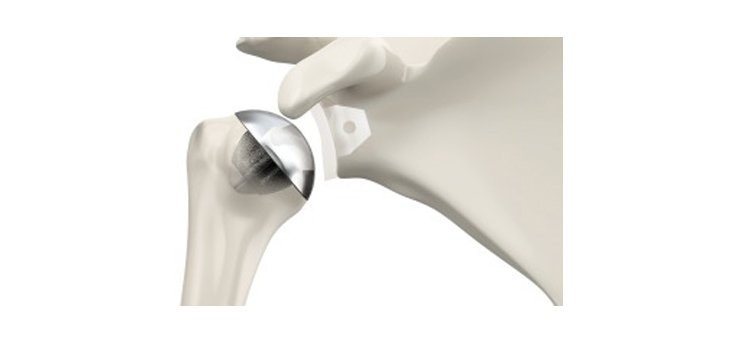
Tornier N.V., says its newly FDA cleared Simpliciti Shoulder system is a “first to market” system for an earlier intervention option for younger and active patients.
Tornier’s New Shoulder for Younger, Active Patients
2 min read Premium comments
Secondary
In a March 10, 2015 announcement, the company said the shoulder system provides surgeons with an “efficient, repeatable surgical technique that is intended to preserve both the patient’s native bone and avoid further trauma to the surrounding soft tissue.”
The FDA clearance comes after an Investigational Device Exemption (IDE) study conducted in the U.S. from 2011 to 2014, including a two-year follow-up. The system is indicated for patients with severely painful and/or disabled shoulder joints resulting from osteoarthritis or traumatic arthritis.
The company says the system provides upper extremity surgeons with an “innovative humeral component, which is intended to deliver the freedoms of precise anatomic placement without the constraints of fixed inclinations, medial offset or posterior offset. Simpliciti is intended to uniquely deliver anatomic results without the procedural complexity of traditional stemmed components.”
Younger Active Patients, Cost-Conscious Hospitals
Sean Churchill, M.D., lead investigator in the IDE study, said, “In my practice, a new category of younger, more active patients has emerged. These patients are more demanding and aren’t satisfied with modifying their lifestyle as a result of shoulder pain. The humeral canal sparing design and revision optionality of the Simpliciti Shoulder System allows me to address this patient population that I have been hesitant to treat with traditional implant systems.” Churchill continued, “Another benefit of the ultra short-stem design is the absence of a metal implant extending into the distal humeral canal, thereby reducing the risk of a mid-shaft humerus fracture, which can serve to compromise typical total shoulder implants. ”
Bradley Edwards, M.D., two-time recipient of the prestigious Neer Award recognizing outstanding clinical science in the field of shoulder and elbow surgery, stated, “The specific features of the system enable physicians to minimize bone disruption thereby reducing procedure times, minimizing blood loss and exposure to anesthesia. These benefits appeal not only to the surgeon, but to the hospital administrators looking to improve patient satisfaction while managing procedure costs.”
“Measured” Market Introduction
Dave Mowry, Tornier’s president and CEO, didn’t sound in a hurry to rush the product to market. He said, “Similar to our market leading Aequalis Ascend Flex shoulder system, we plan to introduce the Simpliciti product through a measured process to ensure education and training paces our product deployment. We believe building long-term success in this new category will take an investment in training and education while allowing the market time to develop.”
Author
React:
Discussion
This is a fascinating development. In my practice we've seen similar outcomes with the revised protocol. The key differentiator seems to be patient selection criteria. Has anyone else noticed the correlation with BMI thresholds?
Great point. I'd push back slightly on the conclusion, the sample size in the cited study is too small to draw population-level inferences. That said, the directional signal is compelling and worth a larger RCT.
We implemented a similar approach last year. Early results are promising but we're still gathering 12-month follow-up data. Happy to share our protocol if anyone is interested.
Join the conversation
Orthopedic professionals are discussing this. Sign in and upgrade to read every comment and add your voice.