
The fifth annual White House Science Fair took place on March 23, 2015.
Teen Inventor of Spinal Device at White House
1 min read Premium comments
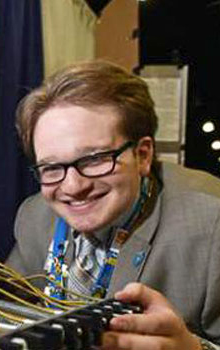
About three dozen of the hundred or so students invited to attend, got to share their inventions with the President. One student, 18-year-old Harry Paul of Port Washington, Long Island, New York, got to speak to the President about his new type of spinal implant that expands over time.
Congenital Scoliosis Device
It’s personal for young Mr. Paul. He was born with congenital scoliosis, a curvature of the spine that, when congenital, restricts the size of the thorax preventing the heart and lungs from developing. Harry had to have more than a dozen spinal surgeries to help correct the problem as his body grew. As Harry began developing his idea he went to see the folks at K2M Holdings and is partnering with them to get the implant tested and developed.
His implant expands over time, helping developing spines stay straighter as they grow, and lengthening the time young patients can go between surgeries. Harry’s implant could potentially help lower the number of risky procedures needed from over a dozen to less than five over the course of a child’s surgical treatment.
Engineering Award Winner
His design earned him numerous awards, including the Grand Awards of First Place, Best in Category (Bioengineering), and the Innovation Exploration Award at the 2014 Intel International Science and Engineering Fair.
For the international competition’s Engineering: Materials and Bioengineering category, Harry won the Best of Category Award of $5, 000 for his project “Growing Spine Implant and Test Method.”
In an interview with the local CBS affiliate last summer, Harry said, “I’m happy when I’m helping people, and I’m better at helping people by being happy…I’m hoping that the treatment will be easier and better for the children, so they won’t have to go through the same ordeal that I went through.”
Harry currently attends Tufts University in Medford, Massachusetts, where he studies biomedical engineering and public health.
Author
React:
Discussion
This is a fascinating development. In my practice we've seen similar outcomes with the revised protocol. The key differentiator seems to be patient selection criteria. Has anyone else noticed the correlation with BMI thresholds?
Great point. I'd push back slightly on the conclusion, the sample size in the cited study is too small to draw population-level inferences. That said, the directional signal is compelling and worth a larger RCT.
We implemented a similar approach last year. Early results are promising but we're still gathering 12-month follow-up data. Happy to share our protocol if anyone is interested.
Join the conversation
Orthopedic professionals are discussing this. Sign in and upgrade to read every comment and add your voice.