
A peer reviewed study of 104 consecutive procedures found that absorbable subcuticular staples are a safe, secure, efficient, and effective modality for skin closure in knee arthroplasty. When compared with metal staples, the absorbable staples save time in surgery and “uncomplicated cosmetic healing and improved patient satisfaction, ” according to the authors Jonathan H. Biebl, M.D., and Nathan Nistler, PA-C, of Summit Orthopedic in Woodbury, Minnesota.
Study Favors Absorbable Staples Over Metal
1 min read Premium comments
Secondary
The study was published in the Internet Journal of Orthopedic Surgery in February.
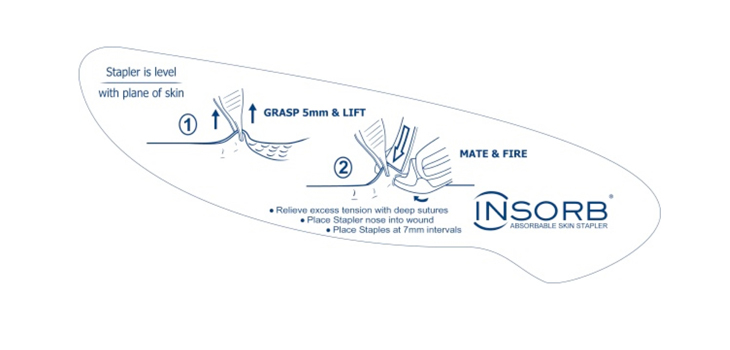
Incisive Surgical, Inc. makes the INSORB skin stapling technology that places an absorbable staple entirely underneath the skin to close surgical incisions. Company officials say that the staples dissolve in the body within a matter of months, breaking down naturally and reducing the pain, cost and inconvenience of post-operative staple removal.
The firm has received several awards for the staple including the 2006 Wall Street Journal Technology Innovation of the Year Award for medical devices.
“The results of this peer-review clinical study are profound, ” said John L. Shannon, Jr., president and chief executive officer of Incisive Surgical. “The INSORB Staple does not pierce and puncture the outside of the patient’s skin like metal skin staples, and this study suggests that the INSORB Skin Closure Technology may lead to higher patient satisfaction with reduced costs. The Company estimates that over 100, 000 cesarean sections were closed with the INSORB Stapler in 2014.
Incisive Surgical, Inc. is a privately-held medical device company located in Plymouth, Minnesota. It plans to launch its INSORB Shorty Subcuticular Skin Stapler in May 2015. The INSORB Shorty Stapler holds eight INSORB Staples and is designed to close shorter incisions, including endoscopic ports.
Author
React:
Discussion
This is a fascinating development. In my practice we've seen similar outcomes with the revised protocol. The key differentiator seems to be patient selection criteria. Has anyone else noticed the correlation with BMI thresholds?
Great point. I'd push back slightly on the conclusion, the sample size in the cited study is too small to draw population-level inferences. That said, the directional signal is compelling and worth a larger RCT.
We implemented a similar approach last year. Early results are promising but we're still gathering 12-month follow-up data. Happy to share our protocol if anyone is interested.
Join the conversation
Orthopedic professionals are discussing this. Sign in and upgrade to read every comment and add your voice.